Some genuine roofing contractors are warning people to be careful with supposed roofers requiring payments upfront for the costs of products and deposits. First, it’s uncommon for legitimate roofing contractors to lack a line of credit for purchasing supplies. While deposits aren’t entirely uncommon, it’s important to still be very careful when providing a deposit to a any contractor. See, especially in disaster areas following hurricanes or other storms, scammers are out in full force.
News broke recently that a West Miami-Dade couple ended up charged with a felony for operating a roofing business without a license during a state of emergency! People call up a roofing contractor, assuming they are licensed. Yet, clearly that’s not always the case. The couple completed roofing jobs following Hurricane Irma during a state of emergency. Indeed, the couple allegedly operated their business without a state Department of Business and Professional Regulation contractor’s license!
It’s common to harvest palm leaves for roofing thatch around the globe. For example, in the Bobonaza River valley in Ecuadorian Amazonia, the leaves harvested from the wayuri palm (Pholidostachys synanthera) work well on homes. They’re locally available, unlike many other forms of roofing materials. That would be fine if palm was just used locally. Yet, these days, an increase of palm leaves for thatching of resorts and other structures creates depleted populations.
A natural thatched cabana roof must be treated with flame retardants. Yet, even with these chemicals, the roof isn’t necessarily fire-safe. Wouldn’t it be nice to have a fire on a warm evening without worrying about embers burning your cabana roof? Think of it, even treated natural thatch catches fire. The flame retardants just slow the process. Plus, the flame retardants used on natural thatch have questionable environmental impacts.
With traditional Bali thatching, the hips are the most vulnerable. A lifespan of around 12 years is the best you can hope when using natural thatch for a Bali thatch roof. With our state-of-the-art synthetic thatch, you can expect all the thatch, including the hips to last decades. With natural thatch, a Bali thatch roof should be at an angle no less than 30 degrees. You can go much less that that with our roofs though. You can use our Bali thatch on any sloped roof with a pitch of 2/12 or greater.
Are you planning a DIY tiki hut or a tiki bar? Looking for a thatch product to top it off? Well, Endureed is one of the easiest roofing products for DIY enthusiasts. It lays much easier and lasts much longer than thatch rolls. The roof of your tiki hut could last literally decades if topped with Endureed synthetic thatch.
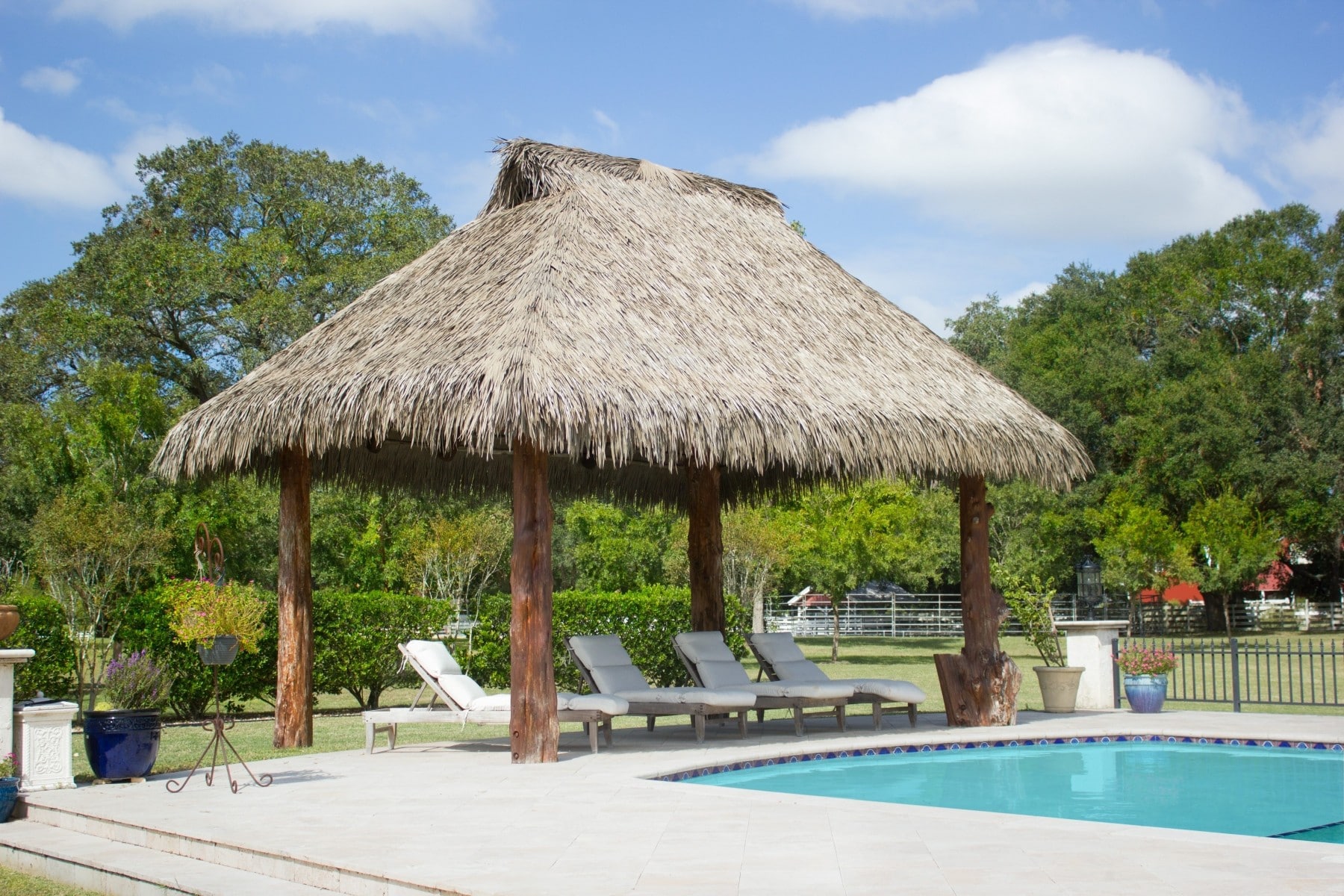
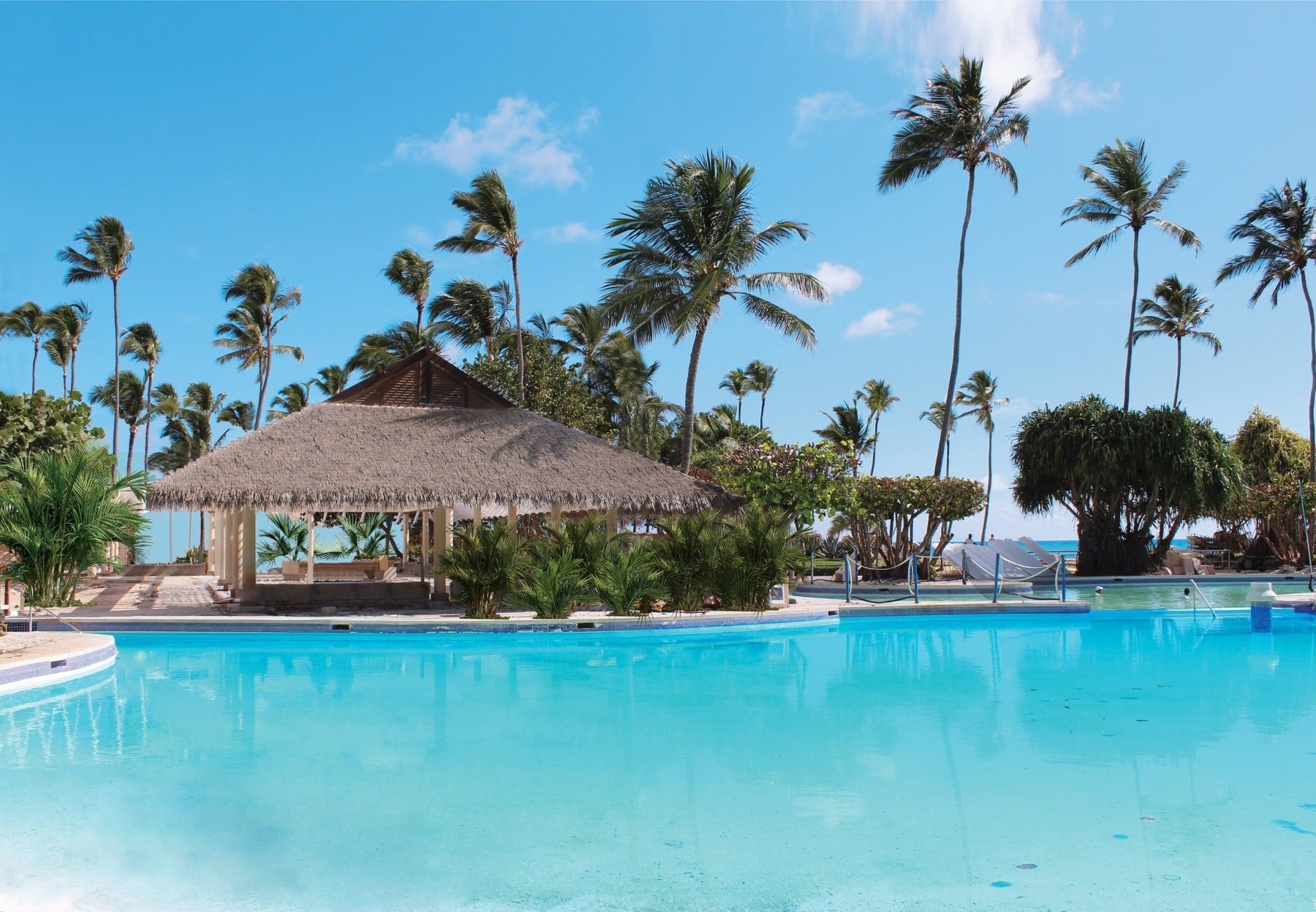
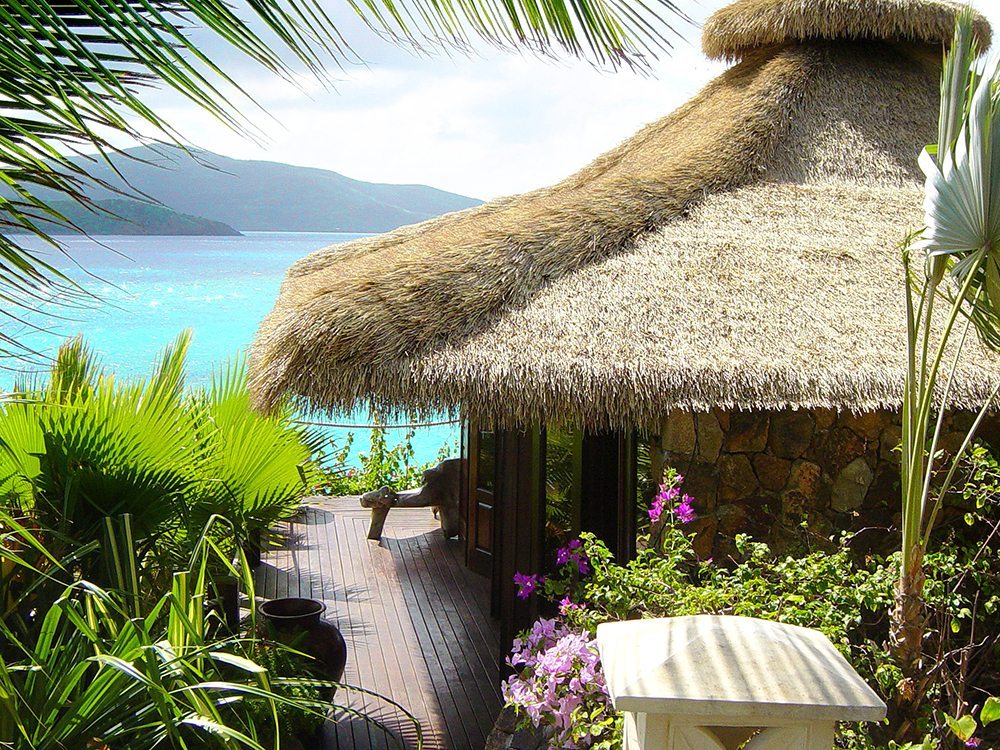
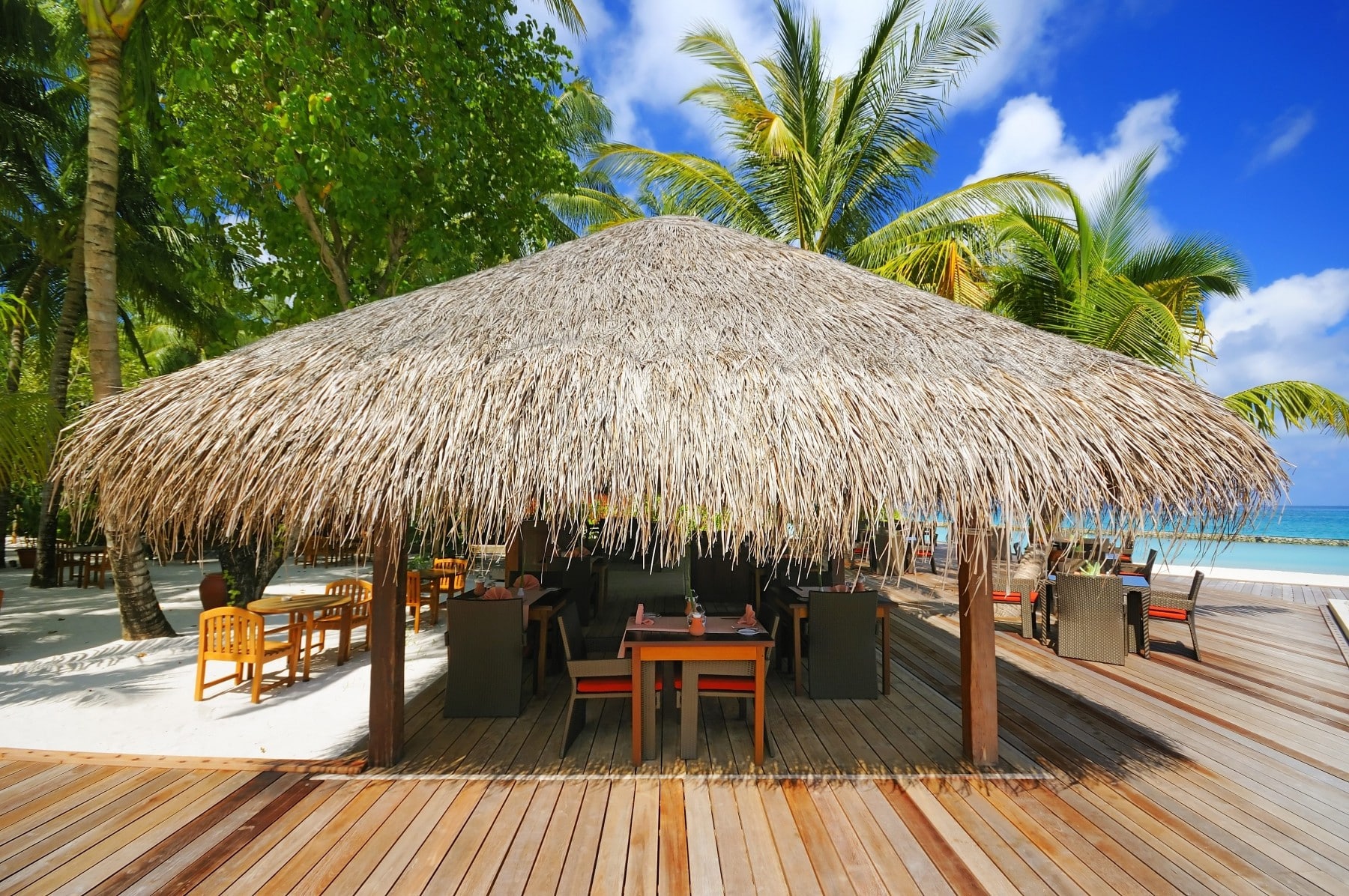
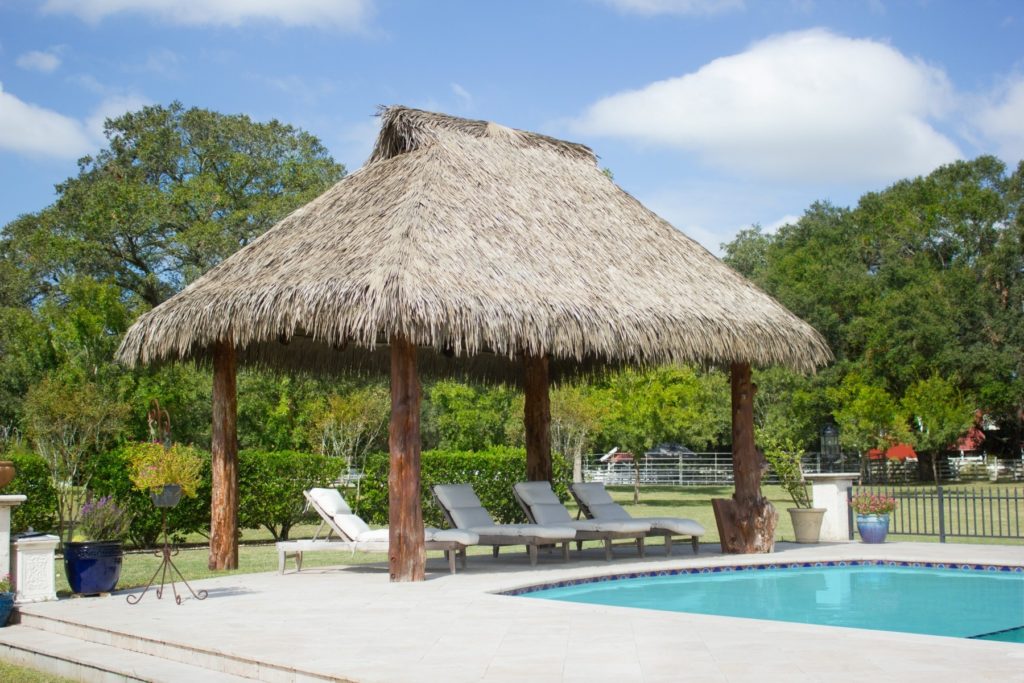
If you’re trying to decide between synthetic thatch and natural thatch for the cabanas or gazebos at your resort, we can help. To us, the decision is obvious. Do you like the look of that thatch gazebo pictured above or do you like the look of the thatch gazebo below?