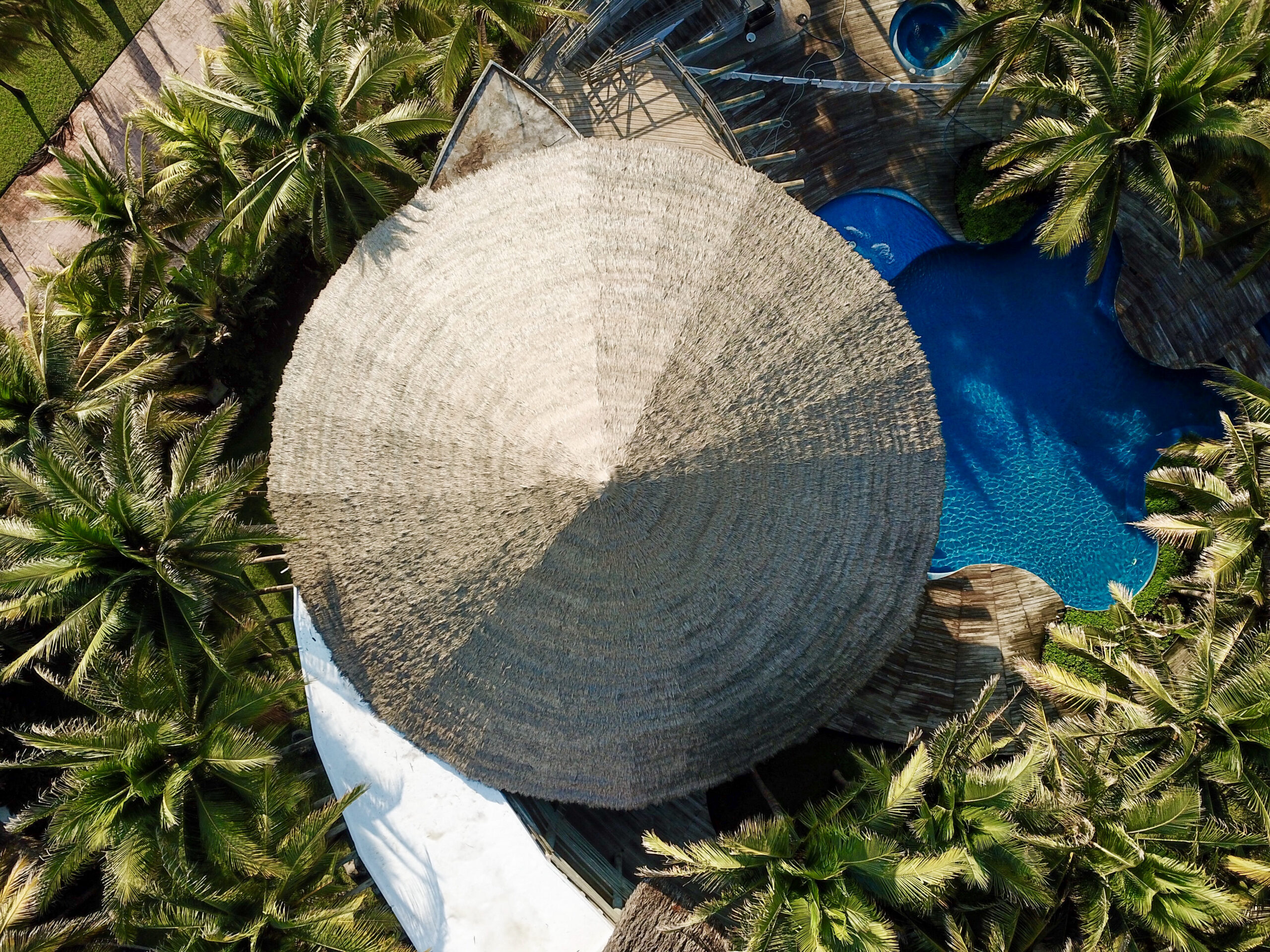
Thatch roofing for contractors presents decisions that do not come up on standard roofing jobs. The material choice drives everything downstream — who can install it, what compliance obligations follow, what your client will be calling about in year three, and whether you want to be the contractor who specified it.
Most contractors who have worked with both natural and engineered thatch arrive at the same place. Here is what drives that decision.
The Labor Pool Problem with Natural Thatch
Engineered thatch can be installed by any qualified roofer. Natural thatch requires a master thatcher — a specialist with a shrinking practitioner base in most U.S. markets.
Engineered thatch installs like a shingle system. Any qualified roofer can complete the installation. Endureed’s documentation supports contractors through the first project, and the process is consistent across every subsequent one.
Natural thatch requires a master thatcher — a specialist trade with a limited, aging practitioner base in most U.S. markets. This is not a scheduling inconvenience. It is a genuine constraint that affects project timelines, subcontractor costs, and your ability to deliver on time. No contractor should put an untrained roofer on a natural thatch installation. Premature failure, liability exposure, and a client who calls you every time the roof needs attention are the predictable outcomes.
For contractors evaluating thatch roofing options, the labor availability question often settles the specification before anything else.
Fire Compliance: One-Time vs. Ongoing
Engineered thatch carries a permanent Class A fire rating. Natural thatch requires recurring chemical treatment that degrades and must be reapplied throughout the roof’s service life.
Natural thatch is a fire hazard without treatment. On-site chemical application is required to meet local, state, and federal fire and building codes — and that application degrades over time. Reapplication is a recurring obligation for the life of the roof. On commercial projects where code compliance is audited, that schedule is not optional, and the responsibility for coordinating it does not disappear after the job closes.
Endureed’s Performance and Premium lines carry a Class A fire rating through Endureed FlameCore Technology. That rating is built into the material at manufacture. It does not degrade, does not require reapplication, and does not create an ongoing compliance obligation for you or your client.
When you specify engineered thatch, the fire compliance conversation ends at the permit stage.
Pest and Wildlife: Not Your Client’s Problem to Manage
Engineered thatch contains no organic material and attracts no pests. Natural thatch is a documented nesting environment for birds, rodents, and insects.
Natural thatch is organic. Birds, rodents, and insects treat it as a nesting material — and the expenses that come with pests in a thatch roof fall on your client for the life of the installation. Regular visits from pest control are not a hypothetical; they are a documented pattern on natural thatch commercial properties. That is a client relationship problem as much as it is a maintenance one.
Engineered thatch contains no organic material. Netting and deterrents are not required. The pest conversation does not exist.
What to Tell Clients About the Environmental Question
Clients increasingly ask about sustainability. Many assume natural thatch is the greener choice. It is worth knowing the actual answer.
The invention of the combine severed the historic relationship between roofing thatch and food crop agriculture. Roofing thatch is now a dedicated crop, and that agricultural demand drives fertilizer and pesticide use with documented negative effects on surrounding soil and water. The material is not a byproduct — it is purpose-grown.
Endureed engineered thatch uses a significant proportion of recycled materials and is recyclable at end of life. Its longer service life also reduces cumulative material consumption over time. That is a straightforward answer to a question clients will ask.
Thatch Slippage and Post-Storm Callbacks
Endureed Performance and Premium products are mechanically fastened and wind-rated to 200 MPH. Natural thatch is subject to slippage after storm events and requires a specialist to assess and repair. One of the recurring issues on natural thatch installations is thatch slippage — material movement after high winds or heavy weather. It requires a specialist to assess and repair, which means coordinating a master thatcher on short notice after every significant storm event.
Engineered thatch is mechanically fastened and rated to 200 MPH wind on Performance and Premium products. Post-storm callbacks on Endureed installations are not a pattern.
Which Endureed Product Fits the Project
Learn more about why contractors and designers choose Endureed across every application tier.
Basics — 10-year warranty. In stock. Zero maintenance. DIY-friendly. Residential and backyard applications where commercial fire and wind specification is not required.
Performance — 20-year warranty. Class A fire rated. 200 MPH wind rated. Endureed FlameCore Technology. The standard for commercial and higher-end residential projects.
Premium — 30-year warranty. Class A fire rated. 200 MPH wind rated. Endureed FlameCore Technology. Made to order in six styles. Resort, hospitality, and immersive commercial environments.
Frequently Asked Questions
Can any roofer install engineered thatch?
Yes. Engineered thatch installs like a shingle system and does not require a master thatcher. Any qualified roofer can complete the installation using Endureed’s provided documentation.
Does engineered thatch require fire treatment on site?
No. Endureed Performance and Premium products carry a Class A fire rating through Endureed FlameCore Technology, which is built into the material at manufacture and does not degrade or require reapplication.
How often does natural thatch need to be replaced on a commercial installation?
In most tropical and subtropical commercial climates, natural thatch requires full replacement every five to seven years. With ideal conditions and rigorous maintenance, some installations reach ten years.
Does engineered thatch attract pests?
No. Engineered thatch contains no organic material and provides no nesting environment for birds, rodents, or insects. Netting and deterrents are not required.
What wind rating does Endureed engineered thatch carry?
Endureed Performance and Premium products are rated to 200 MPH wind. Natural thatch carries no comparable wind rating and is subject to slippage after significant weather events.
What warranty does Endureed offer contractors?
Endureed’s Performance line carries a 20-year warranty. The Premium line carries a 30-year warranty. Both include Class A fire rating and 200 MPH wind rating as standard specifications.
The Specification Decision
For contractors specifying thatch roofing, the full picture — installation labor, fire compliance, pest risk, post-storm liability, and warranty coverage — consistently points in one direction. Engineered thatch performs better, creates fewer problems for clients, and eliminates the ongoing obligations that follow a natural thatch specification for its entire service life.
Endureed has been the standard in engineered thatch for over 25 years. The installation support, the performance data, and the warranty are behind every product.
Request a Sample | Get a Quote
Related: Thatch Roofing Cost Comparison | Synthetic vs. Natural Thatch — 20-Year TCO