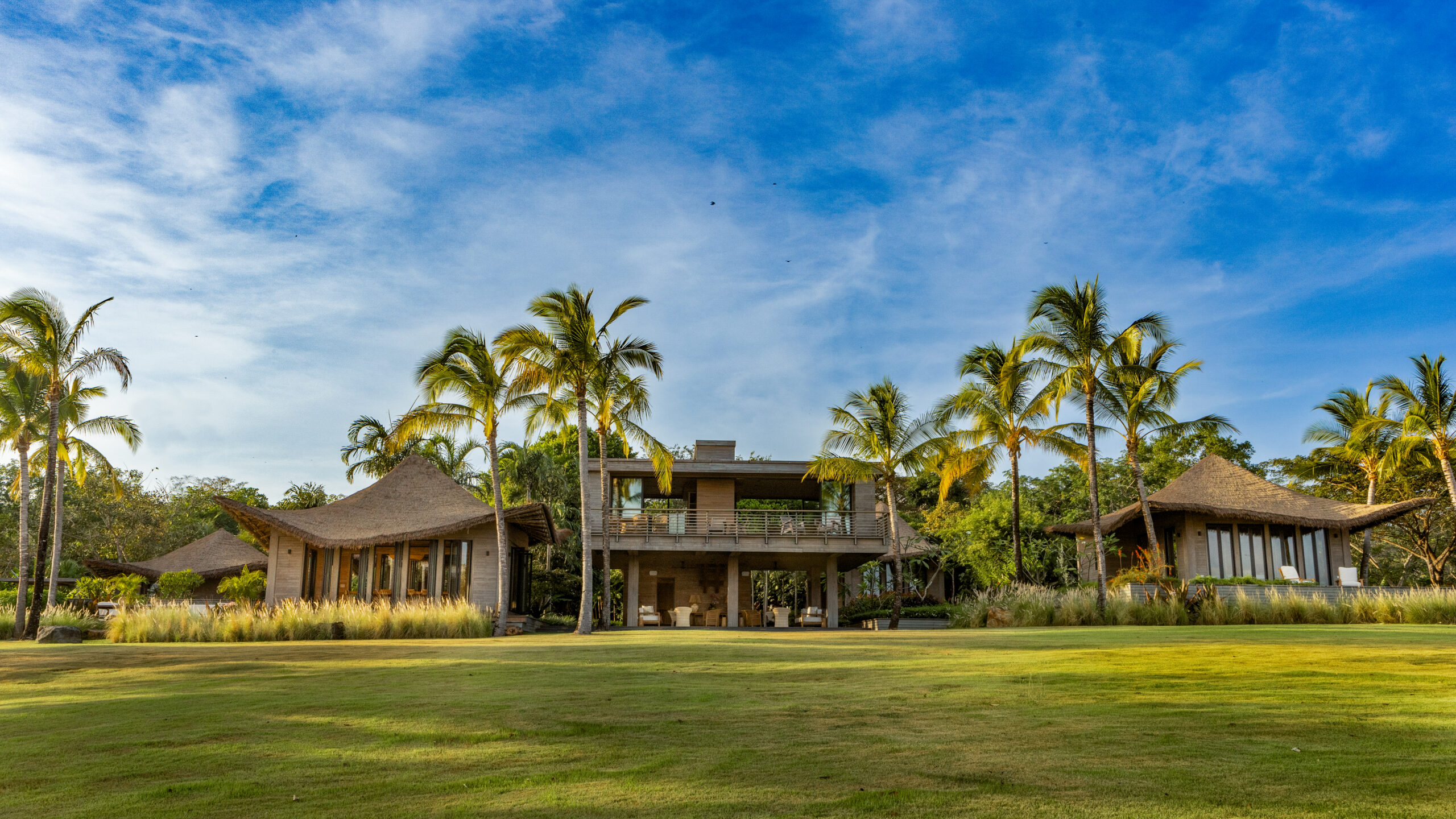
A Pasture Restored
Before Casa Loro existed, the land above Puerto Escondido Bay was worn cattle pasture: six palm trees, three ravines, and a slope toward the Pacific that had spent years shedding topsoil into the water below. Runoff from the cleared land carried sediment straight into the bay, and the coral reef that local fishermen depend on had already absorbed the damage.
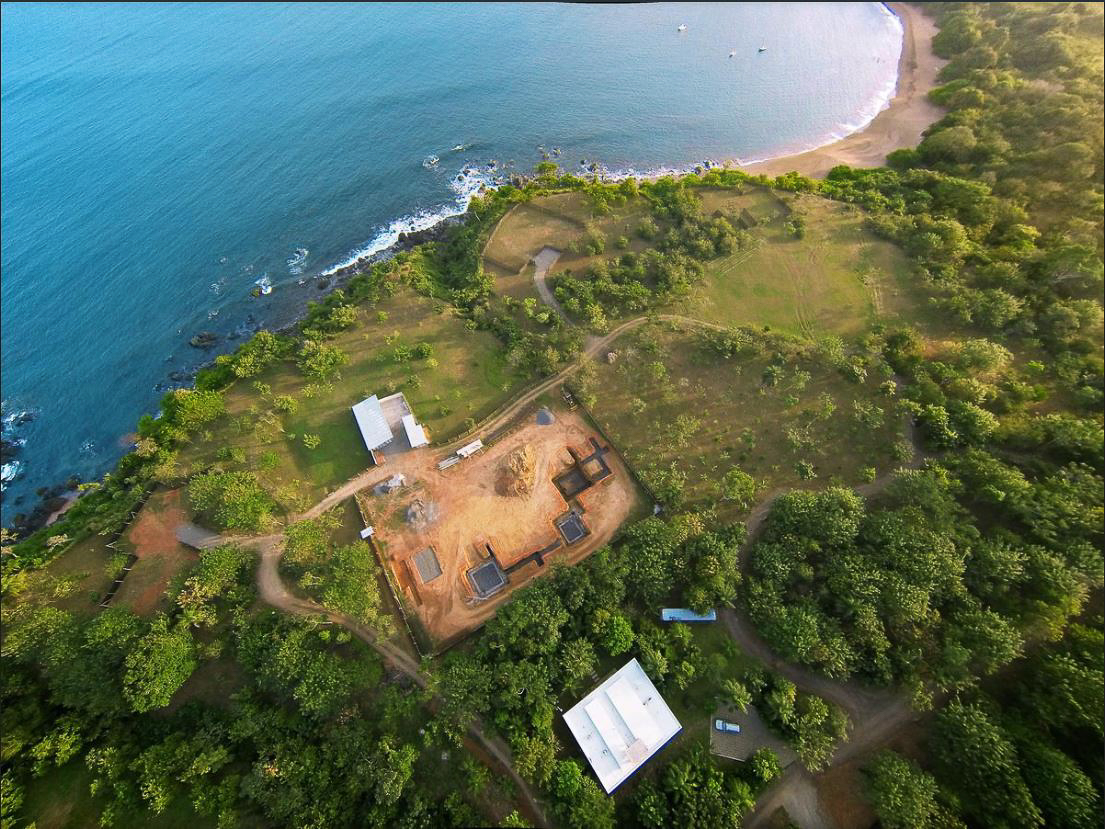
IM/KM Architecture and Planning, the firm led by Kristin and Ivan Morales, started restoring the property years before anyone drew a floor plan. Ivan Morales dates the reforestation work back to 2006, more than a decade before construction on the house itself began in 2017. Bioswales, catchment ponds, vetiver grass, and more than 1,000 native timber and fruit trees went into the ground first. The house now sits inside Reserva Panamaes, the much larger conservation project the Moraleses have spent nearly two decades building around their own work on the peninsula.
A Modern Tree House
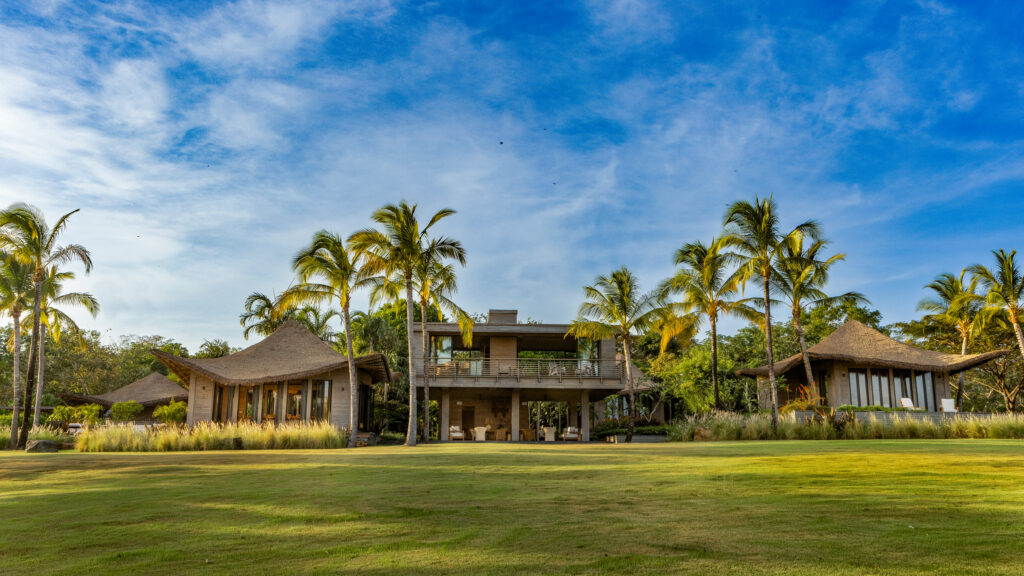
The architecture follows directly from that restoration work. Casa Loro is organized as six connected pavilions, elevated above the forest floor and separated by open gardens and walkways so that every room keeps its ocean views, cross ventilation, and distance from the ground. Two pavilions hold the bedrooms; four are built for gathering: kitchen, dining, office, and an indoor and outdoor living room at the center of the plan. A network of forested trails and bridges ties the main house to guest cabins and a Pool House set at the edge of the cliff, its cantilevered roof aimed straight at the horizon.
The owners gave IM/KM a short brief: wood and thatch, nothing else. Construction leans on teak throughout, and every pavilion carries extended roof overhangs built to keep sun and rain off the walls below. Getting the thatch right, and getting it approved for a fully enclosed structure rather than an open-air pavilion, turned out to be one of the more involved parts of the project.
The Roof
IM/KM looked first at what was already sold in Panama and turned it down. In Ivan Morales’s words, the local stock thatch products “were more like the fake thatch look,” and none of them were built for what the design actually needed. Because the pavilions are fully enclosed rather than open-sided, the roofing had to clear a fire rating that most decorative thatch never has to meet.
Kristin Morales found Endureed doing her own research online. What IM/KM specified was a custom-color version of Endureed’s Capetown collection, a longer and shaggier reed profile than a tightly groomed thatch, built Class A fire rated for an occupied, enclosed space. The color was developed specifically for this project and had to clear one more hurdle before installation: approval from the Vietnamese bamboo design studio building the roof structure itself, which Endureed reached by shipping color samples to Vietnam.
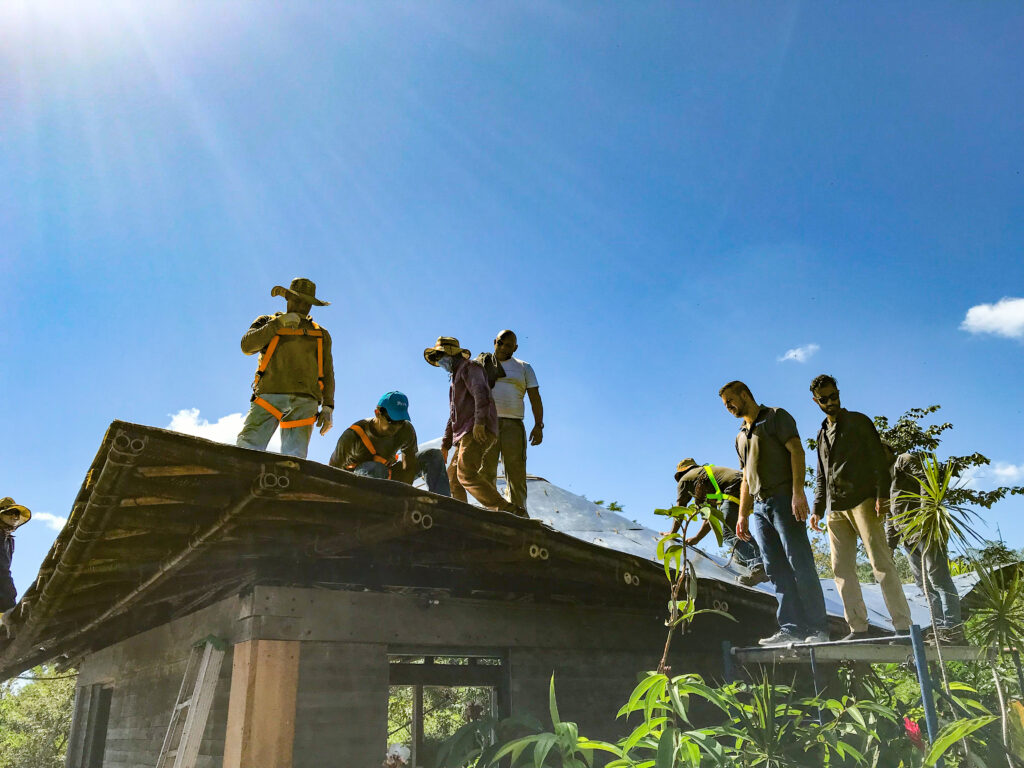
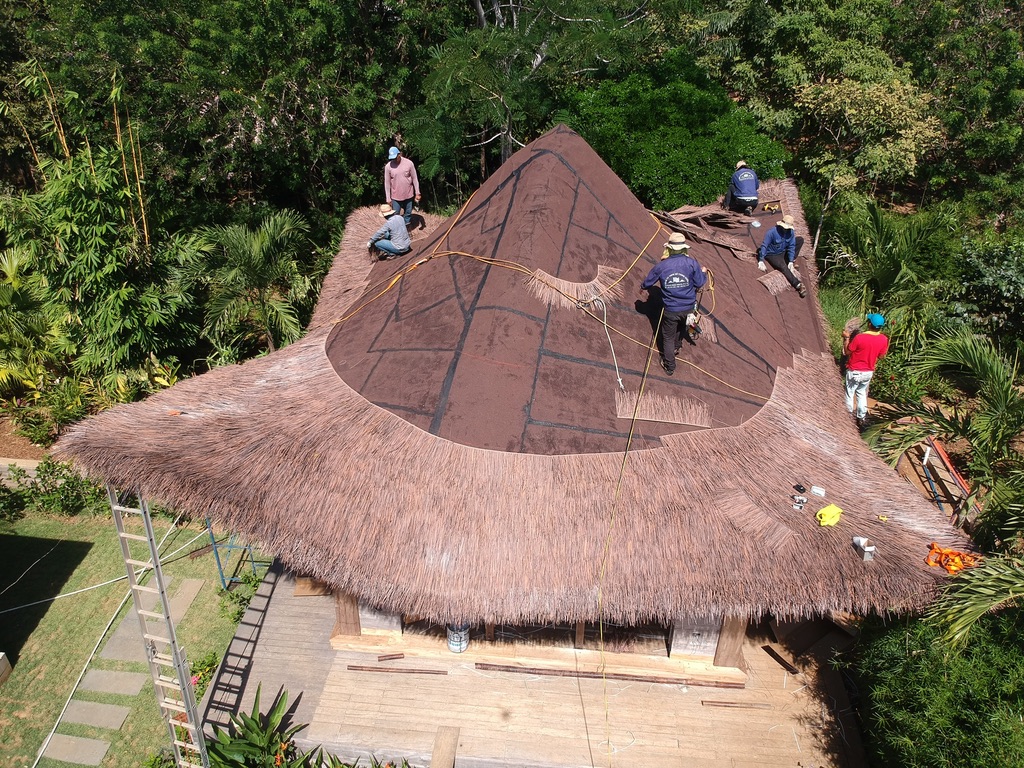
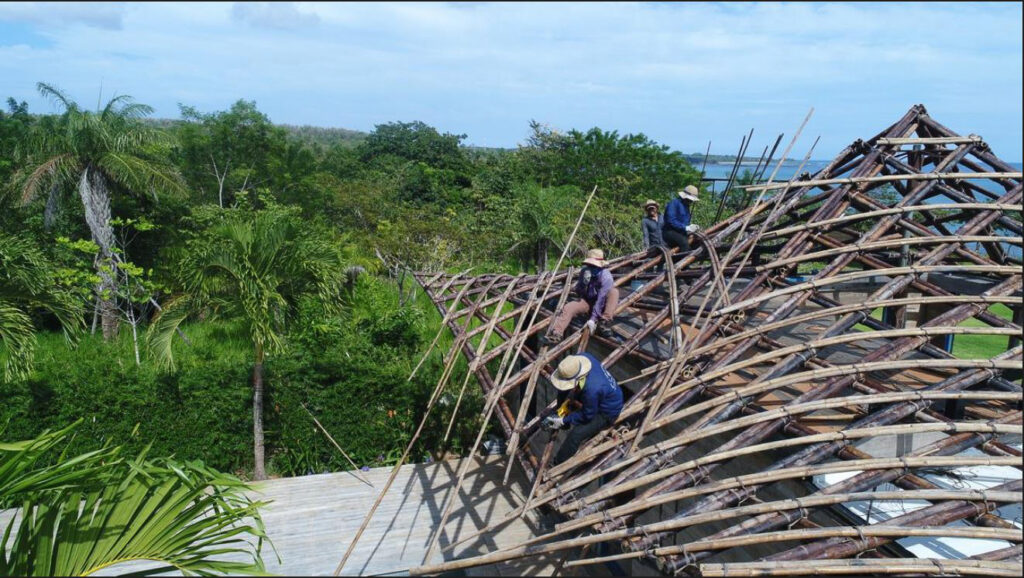
How the thatch actually attached to the roof was not fully solved until the crew was standing on it. The bamboo framing arrived from Vietnam, installed by a Vietnamese crew who, as a matter of practice, would not drill into or penetrate the bamboo, which ruled out Endureed’s original fastening plan. What went up instead was built in layers on site: rattan over the bamboo rafters, then zinc sheeting hand-tied to the structure with rope, pulled tight by workers using their teeth, then a custom rust-toned Soprema underlayment color-matched to sit beneath the thatch, and finally the thatch itself, hand-tied on by a local Panama crew. Endureed specified that particular underlayment because it carries a warranty against puncture, since fastening thatch normally means putting screws through whatever sits underneath it.
None of it had been done quite that way before. The roof went up first, ahead of the rest of the house, built between November 2017 and April 2018, years before Casa Loro was finished in 2022.
In Their Words
From a recorded call between Ivan Morales, Luke Sparks, and Endureed’s Thor Richardt, on why the search led to Endureed in the first place:
We didn’t want to use regular natural thatch. We wanted the look of it, but for an enclosed space we needed to think about fireproofing. We’d started with the products that were already sold in Panama, and we didn’t like any of them because they were more like a fake thatch look. Kristin found Endureed doing research online, and we liked the backstory of the company and the look of it.
Ivan Morales, Principal, IM/KM Architecture and Planning
On how the roof has held up since the crew tied off the last knot in 2018:
To this day, we haven’t had to replace anything. It’s been great. We haven’t had one leak since you guys installed it in 2018.
Ivan Morales, Principal, IM/KM Architecture and Planning
Asked what he would change if he could go back and do the project again:
As far as the roof design is concerned, no, I wouldn’t change anything. It was one of the least painful parts of the project.
Ivan Morales, Principal, IM/KM Architecture and Planning
Recognition
Casa Loro has drawn design and lifestyle press attention over the years, including a 2022 Architectural Digest feature in which Kristin Morales discussed the project’s design intent. A fashion editorial shot on location is scheduled to run in mid-September, with the thatched roofline appearing in several frames. According to Ivan Morales, the earlier press came through a personal connection rather than a formal pitch, which is often how coverage happens for work that is good enough to travel on its own.
To check out more coverage of Casa Loro as well as more amazing projects, check out our gallery