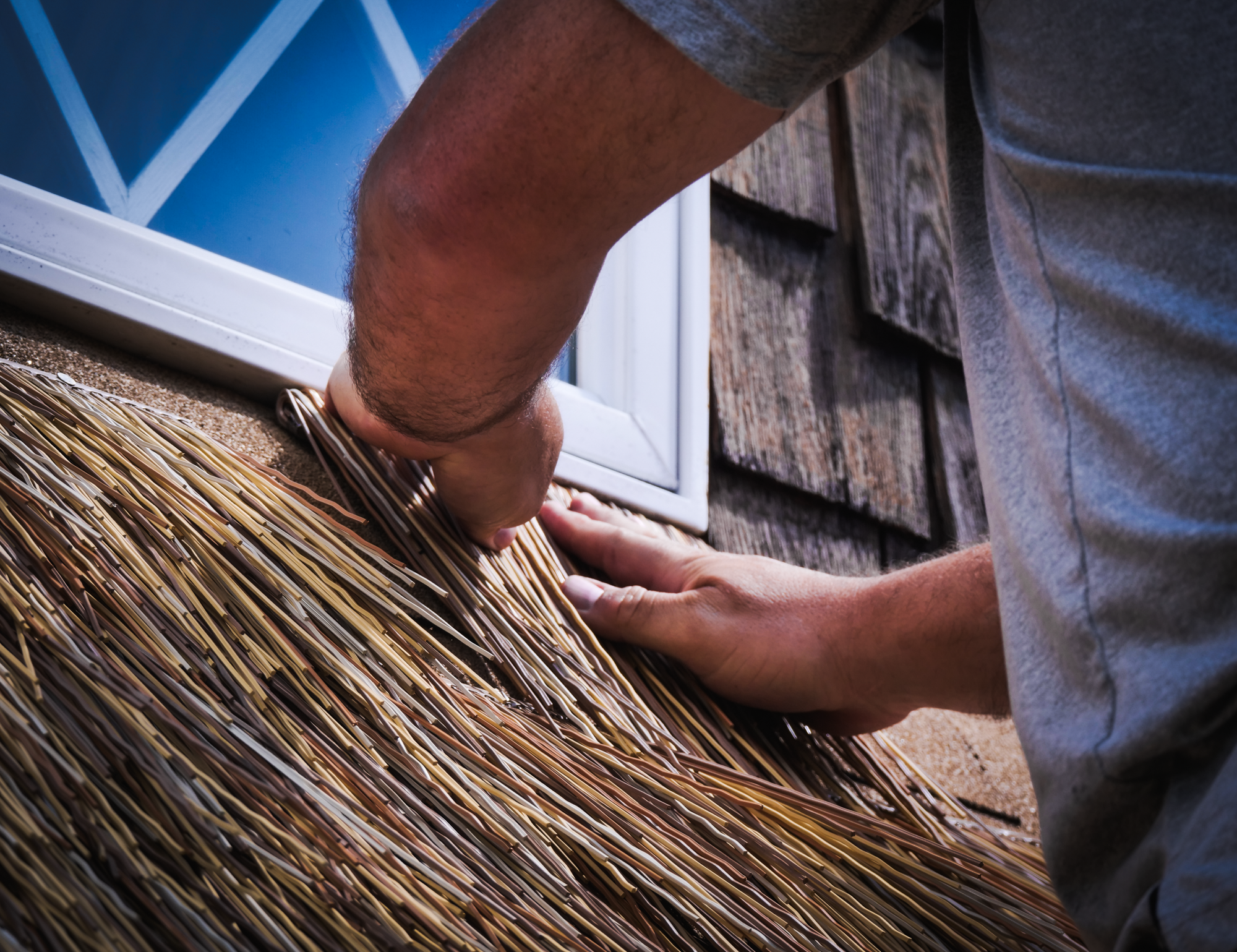
In Defense of a 9,000-Year-Old Tradition
By Abram Huber, Founder & CEO, Endureed
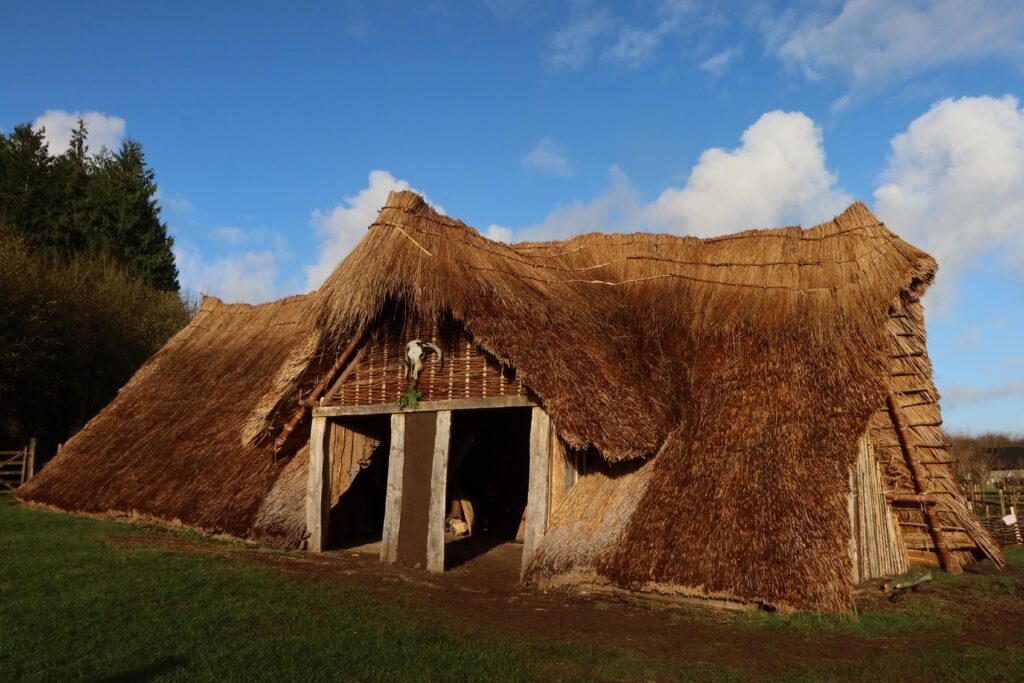
Long before concrete, before steel, before glass curtain walls and engineered lumber, human beings looked at the world around them and built shelter from what they found. They cut reeds, layered heather, bundled straw, and wove palm fronds. They stacked these materials stem over stem, at a pitch steep enough to shed rain and thick enough to hold warmth, and the result was a roof that breathed with the climate rather than fighting it. The roots of this craft trace back nearly 9,000 years, to Neolithic settlements in Europe, to ancient structures across Africa, Asia, and the Pacific. From the rice paddies of Southeast Asia to the chalk downlands of England to the beaches of the Caribbean, thatch became not a primitive solution, but an elegant one. It breathed. It insulated. It shed rain, diffused light, and aged with a kind of natural beauty that no manufactured material has ever fully replicated, and probably never will, fully.
I say all of this at the outset because I want to be clear about where I stand: I am not anti-natural thatch. I never have been. Neither was my father, Barry, who first conceived the idea of Endureed® in the early 90’s, a product that could carry the beauty of natural thatch and survive the rigorous demands of modern building codes. That concept, at exactly the right time – became a career opportunity for me; to develop, build into a business, and to spend the next 27 years shaping into the company Endureed became. We share a deep love for what natural thatch represents: the craft, the texture, the organic warmth it brings to a space, the way it connects a building to its landscape and its history.
What we recognized, nearly three decades ago, is that the tradition was quietly disappearing. Not because people didn’t want it. Because they couldn’t have it.
When the Insurance Underwriter Says No…
In the late 90’s Walt Disney World set out to develop a one-of-a-kind resort hotel at the Animal Kingdom, which is the present day “Jambo House” hotel. The first move by the ‘Imagineers’ was to design one of the most critical parts of the hotel – the roof – with the same material they’d used on other smaller roofs in the park – African yellow grass. But, with the reality of maintenance costs, and the very real risk to public safety, the insurance underwriter, Factory Mutual, rejected the idea of using a natural thatched roof on the resort property. The liability risk was simply too great. Natural thatch, for all its beauty, is a fuel source. It easily ignites. In the wrong conditions, high winds, dry heat, proximity to other structures, it doesn’t just burn. It spreads and turns into a potentially deadly inferno.
That conversation was the necessity that became the mother of invention for what lived, in the garage of a brilliant, creative, inventive roofing contractor, Barry Huber – as a yet unrealized great idea. If one of the world’s most sophisticated hospitality operators, with every resource at their disposal, was being turned away from an aesthetic their guests loved, not by choice but by the cold calculus of risk, then there was a real and urgent problem to solve. Not how to eliminate a thatched roof. How to give it a future.
That question has driven everything our company has done, and been the central focus of my career over the past 27 years.
What Happened in Bayahibe
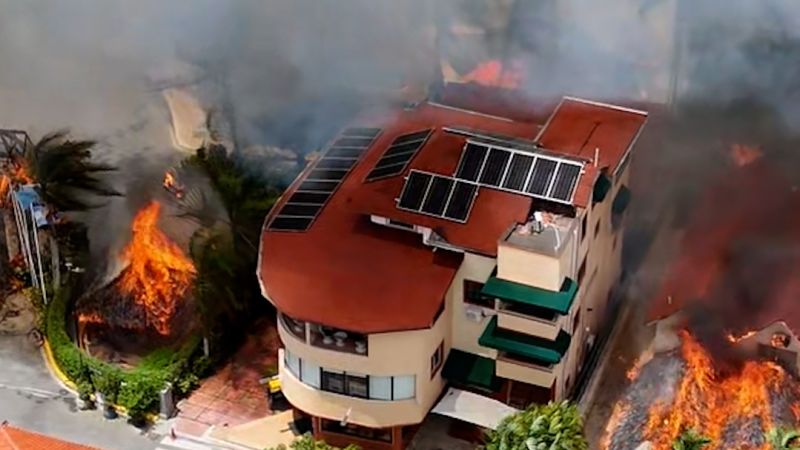
On June 19, 2026, a massive fire tore through the Viva Dominicus Beach resort in Bayahibe, Dominican Republic. Nearly 1,700 guests were evacuated. One woman, a 46-year-old tourist from Caserta, Italy, did not survive. Preliminary assessments from Dominican emergency authorities indicated that the fire spread rapidly because portions of the resort featured palm-based thatched roofing combined with strong coastal winds, allowing flames to move quickly across interconnected structures.
I want to be careful here. The investigation is ongoing. I don’t know precisely every factor that contributed to what happened. And I am not writing this to indict anyone. Not the resort, not the developers, not the ownership group. The hospitality industry across the Caribbean operates under enormous pressure: cost, aesthetics, guest expectations, supply chain limitations, and building codes that vary dramatically from one jurisdiction to the next, and perhaps most importantly, and something I proudly stand behind – giving guests an authentic experience. What I will say is this: her death did not have to happen. Not because thatched roofing needs to disappear from the world’s resorts. Because it needed to change.
We Are Not Claiming to Replace the Craft
This is the distinction I want every hospitality developer, resort operator, and architect to understand clearly.
We are not claiming to replace the craft. We are aiming to preserve the places where the craft belongs but can no longer safely go.
A master thatcher is a skilled artisan. The knowledge of how to select, prepare, layer, and maintain natural reed or palm is passed down through generations, and it produces something genuinely beautiful. We have the deepest respect for that tradition. It would be ignorant to pretend that what we make is identical to what a master thatcher produces by hand.
What we make is something different, and deliberately so: an engineered material that carries the look, the texture, the warmth, and the spirit of natural thatch into environments where natural thatch cannot safely exist. High-density resorts. Proximity to occupied structures. Coastal environments with high winds. Properties that require fire-resistance ratings that natural materials simply cannot meet.
Since 1999, the resorts that have chosen our product have done so not in spite of loving natural thatch, but because of it. They wanted the tradition. They wanted the aesthetic. They wanted their guests to feel that connection to a building material that is ancient and warm and alive-feeling in a way that tile or metal simply is not. They chose Endureed because it was the only responsible path to getting what they actually wanted.
The Problem With the Market
In 27 years, we have watched a lot of brands enter this space and exit it. Some lasted a few years. Some held on a bit longer. The economics of producing something that looks vaguely like thatch without investing in the engineering behind it are, on the surface, appealing. Lower cost of goods. Faster time to market. A product that photographs well enough to close a deal.
The problem is what happens after installation. UV degradation. Unnecessary color fade. Structural failure under wind load. And in the worst cases, fire spread, because the material was never genuinely engineered for the environments where it was being sold.
The difference between what we do and what knock-off materials do is not merely aesthetic, though the aesthetic difference is significant. It’s what you can’t photograph: decades of material science, fire-resistance testing, iteration through real-world conditions, and the institutional knowledge of a company that has been doing only this for nearly three decades.
The brands that have come and gone haven’t just failed their investors. In some cases, they’ve failed the tradition itself, leaving behind a trail of underperforming installations that make the entire category look unreliable.
The Vision, Unchanged After 27 Years
The worldwide market for thatched roofing is real. It is large. It spans every continent, every climate zone, every category of hospitality from budget beach bars to ultra-luxury eco-resorts. People across the world want to be under a thatched roof. That desire isn’t going anywhere.
Our vision, from the beginning, has been simple: that desire should be able to be satisfied safely. That the tradition should have a future. That an architect in the Dominican Republic or a homeowner in Ireland or a boutique resort in the Florida Keys should be able to specify a thatched roof and know, with confidence, that what goes on that building will last, will perform, and will not become a catastrophe waiting for a spark, or a victim to the next significant wind event.
What happened in Bayahibe is a reminder of the stakes. For the families who evacuated with nothing. For her family. For an industry that has, in too many cases, treated roofing material as an afterthought rather than a life-safety decision.
We got into this business because we believed the tradition deserved better. Twenty-seven years later, we still do.
Abram Huber is the Founder and CEO of Endureed, the pioneer and industry leader in engineered synthetic thatch roofing. For nearly three decades, Endureed has served resort, hospitality, and commercial clients across the United States, the Caribbean, and internationally. Learn more at endureed.com.