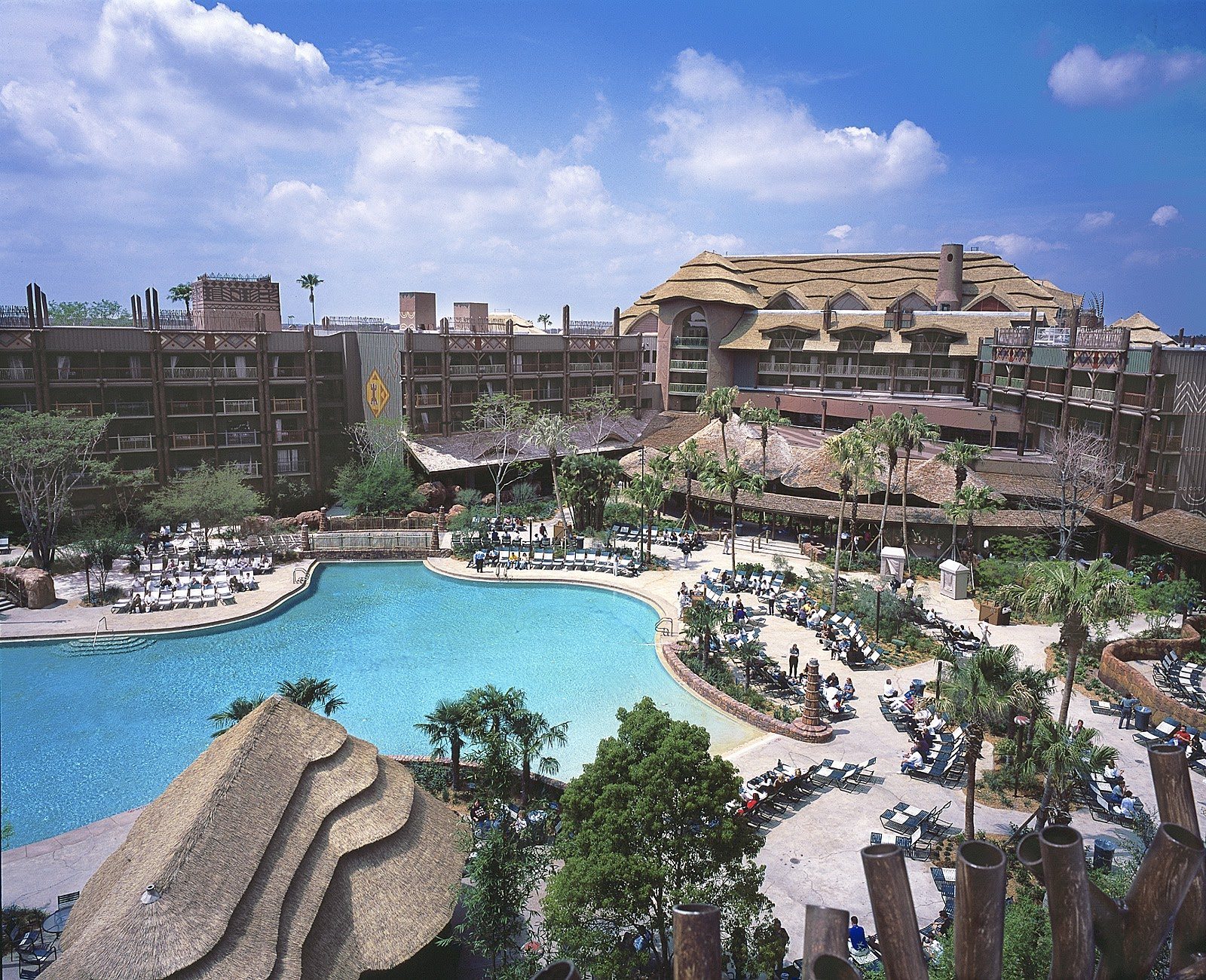
| 45,000 SQ FT | AGE 19
ENDUREED’S FOUNDER, ON THE DAY DISNEY CALLED |
25+ YEARS
STILL STANDING, STILL PERFORMING |
ZERO
NATURAL-THATCH INSURERS WILLING TO COVER THE ORIGINAL DESIGN |
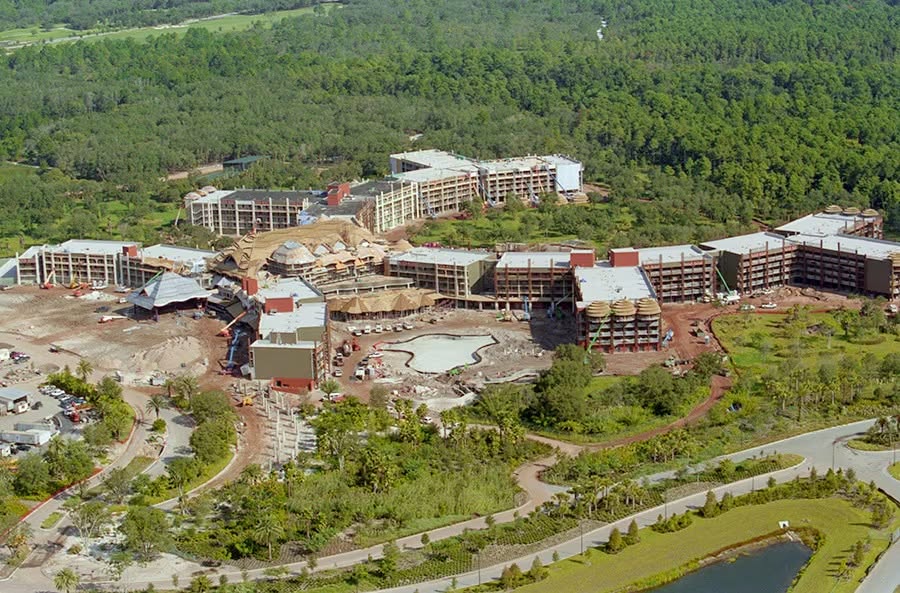
AT A GLANCE
| Client | Walt Disney Imagineering |
| Property | Disney’s Animal Kingdom Lodge |
| Location | Bay Lake, Florida, Walt Disney World Resort |
| Architect | Peter Dominick, Urban Design Group (now 4240 Architecture) |
| Creative Direction | Joe Rohde, Executive Designer, Walt Disney Imagineering |
| General Contractor | Centex Rooney |
| Scope | 45,000 square feet of engineered thatch roofing |
| Opened | April 16, 2001 |
| Requirements | Class A fire rating, hurricane-grade wind performance, a 20-year warranty, and full compliance with Florida and Reedy Creek building codes and Factory Mutual insurability |
| Endureed’s Role | Design, materials engineering, and fabrication of a first-of-its-kind engineered thatch system, led by Barry Huber and his son, Abram Huber |
An Impossible Brief
In the late 1990s, Walt Disney Imagineering set out to build a resort that did not simply reference Africa. It set out to build one that felt like Africa: the light, the material, the texture of a savanna lodge, recreated in Central Florida. Architect Peter Dominick, fresh off Disney’s Wilderness Lodge and the Grand Californian, was brought in to translate that ambition into a building. Executive Designer Joe Rohde and the Imagineering team spent years touring game parks and villages across South Africa, gathering the architectural and cultural detail that would make the resort’s storytelling credible rather than decorative.
The roof was where that ambition met reality. A resort built around the concept of an African kraal needed a thatched roof authentic enough to read from guest balconies, dining rooms, and the savanna itself. Natural thatch could deliver the look. It could not deliver anything else the project required.
| The resort’s thatched roofs establish a sense of actually being in Africa.
· Joe Rohde, Executive Designer, Walt Disney Imagineering |
Florida is hurricane country, and Reedy Creek, Disney’s own building code authority, along with the state of Florida, required a roofing system built to survive it. Factory Mutual, the insurer underwriting a resort of this scale, would not cover a natural thatch roof at all: too flammable, too vulnerable to rot and pests, too short-lived to make sense on a building meant to stand for decades. Imagineering’s own brief called for 20 years of warrantied performance on a material that, in its natural form, rarely lasted five.
There was no product on the market built to solve this. Disney needed someone willing to build one.
Barry Huber Was Already Sketching This Roof
By the time Walt Disney Imagineering came looking for a solution, Barry Huber was already a veteran of specialty and historic roofing work, the kind of builder other contractors called when a project needed something no catalog could supply. He had been sketching his own concepts for a synthetic thatch roof on his own time, long before Disney’s call ever came in: pages of hand drawings working through how a savanna roof might be built without actually being one. When the request finally arrived, his own words for the moment were direct.
The brief, in Huber’s own telling, came down to three things. It had to hold up. It could not burn. It could not blow off. Everything else about the project was negotiable.
That was not.
Copying Nature on Purpose
One early concept was built around something like a whisk broom: loose clusters of fiber meant to read as grass from a distance. It did not survive contact with the fire requirement. The harder problem sat underneath that one: getting a manufactured product to look convincingly random, varied in color and texture, rather than uniform and obviously repeated. It is a problem every faux material runs into, whether the target is slate, wood shake, or grass thatch.
| A consistently random manufacturing scenario is a lot more difficult to do than people would appreciate. It’s like trying to copy nature.
· Barry Huber, Huber & Associates |
The Sample Nobody Noticed, At First
An early prototype went to the office of Centex Rooney, the general contractor building the lodge, to see how it landed. It sat there largely unremarked upon, except for one detail: people in the office had started calling it “spaghetti noodles.” The nickname stuck because, at that stage, it was accurate. The material still had a long way to go before it could pass for African grass thatch from a guest balcony, let alone up close.
Competing With Imagineering’s Own Shop
Huber & Associates was not the only team working the problem. Disney’s own Imagineering group had been developing a thatch shingle in parallel, a design built from roughly 600 separate pieces. When Huber’s team got their hands on samples and tested them for strength, breaking pieces apart to see how they held together, the verdict was clear: there was no path from that design to a roof that could actually be built, inspected, and warrantied at the scale Animal Kingdom Lodge required.
The Turning Point
The moment that changed the project’s direction happened in a meeting, not a lab. Someone on Disney’s side who had seen what Huber had developed pushed him to make the case directly, telling him, as Huber recalls it, that it was his moment to press the advantage. Huber calls it the moment that mattered.
| That was the kick in the rear. It was instrumental. After that discussion, we started getting some real footing for being part of this process.
· Barry Huber, Huber & Associates |
A Father, a Son, and a Wager Against Conventional Wisdom
At 19, Abram Huber joined his father on the wager that would define the next 25 years of both of their careers: an engineered material that could replicate the look of African yellow grass thatch closely enough to fool the eye, while meeting fire, wind, and durability standards no thatched roof had ever been asked to meet.
Conventional wisdom at the time pointed toward caution: use a compound with a track record, and steer clear of anything untested. Huber went the other way.
| I flew in the face of the thinking at the moment, which was to steer away from cutting-edge compounding and toward something proven. That ended up being the only thing that passed the testing.
· Abram Huber, Founder & CEO, Endureed |
It was a gut-check bet on unproven materials science, made under the full weight of Disney’s code, insurance, and durability requirements, with no fallback if the testing failed. It did not fail.
45,000 Square Feet, Built to Outlast the Brief
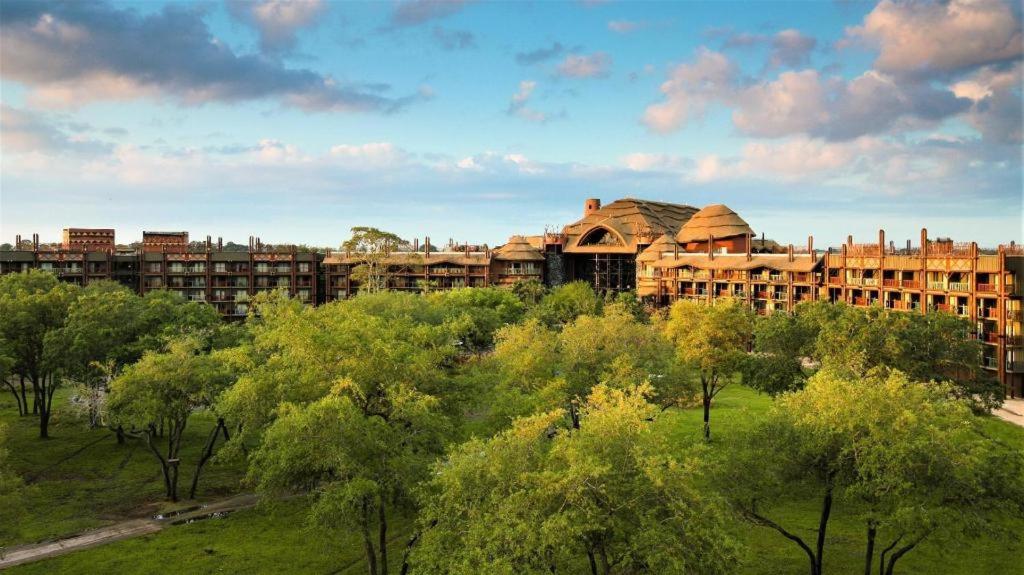
The finished roof at what is now known as Jambo House became the largest engineered thatch installation in America at the time: 45,000 square feet of material shaped, colored, and layered to read as authentic African grass thatch from a guest balcony or from the savanna floor below. It cleared Reedy Creek’s code review, met Florida’s wind requirements, and carried a Class A fire rating natural thatch could never offer. It gave Factory Mutual a roof it could underwrite.
Randy Johnson, a principal at 4240 Architecture, the firm Disney hired to design the lodge, later confirmed the exact scale of the problem Endureed was solving: a custom thatch material had to be developed directly with a fabricator to formulate a non-combustible substitute realistic enough to become the standard for the resort’s later Vacation Club expansion as well.
The lodge opened its doors on April 16, 2001. Eight years later, Disney extended the same design language, and the same roofing system, to a second building on the property: Kidani Village, adding more than 300 villas and a second savanna view around the original roof’s proof of performance.
Guests noticed, even without knowing why. Travel writers touring the resort a decade after opening described the savanna views from their balconies as one of the property’s defining features, animals grazing at eye level beneath a roofline that, by then, had already weathered ten Florida hurricane seasons. The roof was never the story guests came to tell. It was the thing that made every other story on the property possible.
Twenty-Five Years and Counting
The Animal Kingdom Lodge roof has now outlasted its own 20-year warranty by half a decade, still in service, still meeting the code and insurance standards it was built to meet in the late 1990s. Disney has since gone back and replaced other roofing on the property with the same engineered system, a vote of confidence written in capital expenditure rather than marketing copy.
The engineering discipline that cleared Reedy Creek’s review in the late 1990s has held up against every Florida hurricane season since, without the fire, rot, or pest failures that made natural thatch impossible to insure on this property in the first place. What Disney bet on sight unseen, before there was any track record to point to, is the same system still performing on the property today.
| Twenty-five years later, that roof is still there.
· Abram Huber, Founder & CEO, Endureed |
The Project That Became a Category
Animal Kingdom Lodge is Endureed’s largest project by square footage as well as its founding one: the project that forced a 19-year-old and his father to solve, under Disney’s own scrutiny, the exact problem their entire business now exists to solve. Twenty-five years later, that same engineering discipline has been installed in more than 5,000 locations worldwide, from Four Seasons and Universal Studios to Necker Island and Royal Caribbean, and stands behind the category Endureed defines today: engineered thatch, built to a standard the original material was never able to meet.
TIMELINE
| Years Prior | Barry Huber, already a veteran of specialty and historic roofing work, begins sketching his own concepts for a synthetic thatch roof, well before Disney’s call ever comes in. |
| Early Talks | Walt Disney Imagineering looks for a way to build an authentic-looking thatched roof for the planned Animal Kingdom Lodge. An early Huber sample lands in the office of Centex Rooney, the general contractor building the lodge, and quietly earns the nickname “spaghetti noodles.” |
| The Pivot | Imagineering’s own in-house thatch shingle, built from roughly 600 separate pieces, is tested by Huber’s team and found unable to scale into a real, warrantied roof. At a project meeting, a Disney insider pushes Huber to make his case directly. |
| 1998 | At 19, Abram Huber joins his father on the wager that will define the next 25 years of both careers: an engineered compound over anything with a safer track record. |
| 1998–2001 | Design, engineering, and fabrication of the 45,000-square-foot roof system, built to clear Reedy Creek and Florida code review, meet Class A fire and hurricane wind standards, and satisfy Factory Mutual’s insurability requirements. |
| Apr 2001 | Disney’s Animal Kingdom Lodge opens. The roof becomes the largest engineered thatch installation in America at the time. |
| 2009 | Disney extends the resort with Kidani Village, adding 300-plus villas and a second savanna view around the same proven roofing system. |
| 2011–2021 | Travel writers and Disney historians repeatedly cite the resort’s savanna views and thatched architecture as the property’s defining feature, still performing decades into a 20-year warranty. |
| Today | The original roof remains in service more than 25 years after its warranty was written, and the discipline it proved out at Animal Kingdom Lodge now stands behind 5,000-plus Endureed installations worldwide. |
About Endureed
Endureed specializes in high-performance engineered thatch that authentically replicates natural reeds and grasses from around the world. For more than 25 years, the company has served the world’s most prestigious brands and destinations while pioneering residential applications that bring resort-quality aesthetics and safety to everyday homes. Based in Lake City, Florida, Endureed’s products survive the worst nature can deliver while creating spaces that inspire the best in human nature.