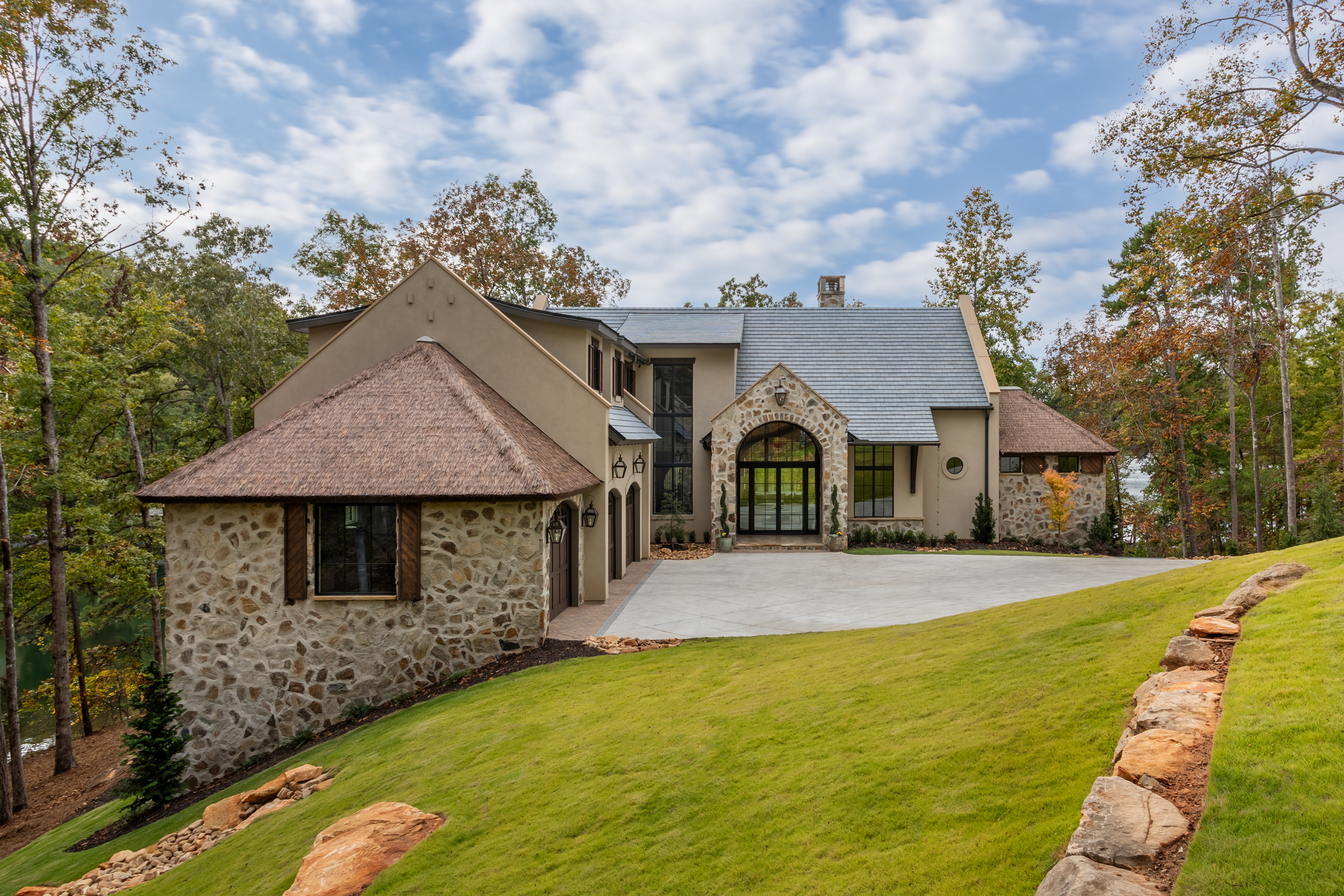
Featured image: MHK Architecture | Inspiro 8 Studio
Engineered synthetic thatch roofing explained: how does synthetic thatch work
Endureed has been manufacturing engineered synthetic thatch since 1999, and the question comes up on nearly every project: how does synthetic thatch work? At its core, synthetic thatch is a polymer-based roofing product designed to replicate the layered depth, texture, and dimensional movement of natural thatch. Engineered thatch — the term Endureed introduced when bringing synthetic thatch into the commercial market — takes that further, meeting fire, wind, and code requirements that organic materials cannot. Throughout this article, you will see both terms used: synthetic thatch describes the category; engineered thatch describes the performance standard. The distinction matters. The answer involves material science, shingle geometry, and performance engineering.
What Engineered Thatch Is
Engineered thatch is a complete, standalone roofing system installed shingle-by-shingle onto a structural substrate — the same way slate or cedar shake is installed. Each shingle is a formed polymer unit that interlocks with adjacent courses to create depth, drainage, and the irregular visual profile associated with natural reed or palm thatch.
Definition: How Does Synthetic Thatch Work
Synthetic thatch works by layering individual polymer shingles — manufactured from HDPE or PVC, depending on the product line — in overlapping courses from eave to ridge. Each shingle is engineered with dimensional variation, color depth, and UV-stable pigmentation to replicate the appearance of natural reed, grass, or palm. The product provides waterproofing (palm profiles on its own, reed profiles with an underlayment), fire resistance, and wind uplift performance.
The distinction from natural thatch is structural: natural thatch is bound in place using spar hooks or twisted wire and relies on steep pitch for water shedding. Endureed’s engineered thatch products are fixed mechanically and can be installed on pitches as low as 3:12, depending on the product line.
The Material Layer: What Engineered Thatch Is Made Of
Endureed’s shingles are manufactured from high-density polyethylene (HDPE) and polyvinyl chloride (PVC) using a proprietary formulation that integrates UV stabilizers and pigmentation at the material level — not as a surface treatment. This matters because a surface-treated product fades as weathering erodes the coating. In Endureed’s HD Color process, pigment, light behavior, and shadow depth are built into the material itself, so color stability is measured in decades, not years.
The fire-resistance chemistry is handled by Endureed Flamecore Technology™, Endureed’s proprietary fire-retardant system engineered specifically for polymer thatch. Rather than relying on a field-applied chemical treatment, Flamecore is integrated during manufacturing, which means every shingle that leaves the facility carries the same fire performance. This is how Endureed achieves a Class A fire rating — the highest classification available for roofing materials — across the Performance and Premium product lines.
Fire And Wind Performance Figures
- Class A fire rating — ASTM E108; the highest available for roofing
- Wind uplift rated in excess of 200 mph — Florida Product Approved
- UV-stable pigmentation — no surface treatment; color is intrinsic to our products
- Zero required maintenance across the warranty period
These figures are not estimates. They are specification-grade test results that support permitting, insurance underwriting, and architectural specification documents.
How Our Shingles Create The Thatch Appearance
The visual authenticity of an engineered thatch roof is a geometry, layering, and the shape of the strands themselves. How does synthetic thatch work to look like the real thing? It comes down to three design variables: shingle profile, course depth, and color variation.
Each Endureed shingle is formed to create a dimensional fringe — the textured, slightly irregular outer edge that registers as natural fiber movement in photographs and at eye level. When installed in overlapping courses, the accumulated depth of successive rows creates the ridge-and-valley visual texture that distinguishes authentic thatch from flat, uniform roofing.
Color variation is handled by mixing shades within a single shingle batch — no two courses read identically, which is how natural reed behaves. This is distinct from competitors who produce shingles in a single flat color and rely on post-installation weathering to create variation. Endureed’s HD Color process delivers that variation from day one and maintains it over the warranty period.
How Profile Differences Translate Across Product Lines
Endureed’s three product lines — Basics, Performance, and Premium — each use a different shingle geometry calibrated to the intended application and audience.
Basics uses a streamlined palm profile suited to residential structures, tiki huts, and pool palapas. Installation is accessible to experienced contractors and capable DIY builders.
Performance (available as Performance Palm, Performance Reed, and Performance Grass) is a specification-grade category for commercial and regulated residential applications. Shingle geometry is calibrated for higher installation density and greater dimensional depth than Basics.
Premium (Bali, Capetown, Dominica, Kilimanjaro, Kona, Somerset) represents Endureed’s highest-fidelity profiles. Each Premium style is engineered to replicate a specific regional thatch — Kilimanjaro references Tanzanian cape reed; Somerset replicates hand-trimmed European thatching; Kona captures Hawaiian pili grass. These profiles are used on luxury resorts, cultural landmarks, and high-end private residences where material authenticity is subject to design scrutiny.
For a detailed side-by-side evaluation, see Endureed’s natural vs. engineered thatch comparison.
Warranty Structure Reflects Engineered Performance Confidence
Endureed’s warranty periods are not marketing ranges. They are product-specific commitments backed by 25 years of documented installations in coastal, tropical, high-UV, and hurricane-exposure environments:
- Basics: 10-year warranty
- Performance: 20-year warranty
- Premium: 30-year warranty
No re-thatching. No chemical re-treatment. No replacement cycles driven by pest infiltration or material degradation. The product performs or Endureed stands behind it.
This is the material difference between engineered thatch and natural thatch at the specification level. Natural palm thatch in a coastal tropical environment requires full replacement every three to five years. Over a 20-year period, that is four to six complete re-roofing cycles plus labor. For architects specifying engineered thatch on resort and commercial projects, the lifecycle cost argument is unambiguous.
Installation: How Engineered Thatch Attaches To A Structure
Engineered thatch installs over standard wood or steel framing using purlins — horizontal structural members spaced according to the shingle’s nail line. Each shingle is mechanically fastened through pre-formed nail locations and overlaps the course below by a defined minimum exposure. Ridge treatment uses dedicated ridge shingles that cap the peak with the same dimensional profile as the field shingles.
Unlike natural thatch, which requires steep pitch (45 degrees minimum, 50 degrees preferred) to prevent water penetration by gravity, Endureed products are installed over a waterproof membrane substrate. Waterproofing is handled by the membrane, not by pitch. This expands the viable architectural applications considerably — lower-slope structures that cannot accommodate natural thatch geometry can carry engineered thatch without compromise.
For a complete walkthrough of the fastening sequence and course layout, see the engineered thatch roofing FAQ.
Frequently Asked Questions About How Synthetic Thatch Works
How does synthetic thatch work in high-wind environments? Endureed engineered thatch is mechanically fastened to the structural substrate at each course and is Florida Product Approved for wind uplift in excess of 200 mph. Because fastening is per-shingle rather than bundle-bound, individual shingle failure does not compromise the adjacent field.
Is engineered thatch actually waterproof? The Endureed product achieves waterproofing through the combination of mechanical shingle overlap (palm profiles) or an underlayment membrane (all other profiles) — not through the shingle material alone. Basics Reed, Performance Grass and Reed and all Premium profiles are installed over a waterproof substrate, providing full waterproofing at code-minimum pitch.
How does synthetic thatch achieve a Class A fire rating? Endureed Flamecore Technology integrates fire-retardant chemistry into the polymer during manufacturing rather than applying a field treatment. This means every shingle carries consistent, tested fire resistance that does not diminish over time or require re-application.
What is the difference between Basics, Performance, and Premium profiles? Basics is designed for residential and light commercial applications with a 10-year warranty. Performance is a commercial-grade specification product available in three profiles — Palm, Reed, and Grass — with a 20-year warranty. Premium is Endureed’s highest-fidelity line, available in six regionally inspired profiles with a 30-year warranty.
What This Means For A Project Specification
How does synthetic thatch work at the specification level comes down to a clear hierarchy: material-integrated fire and UV performance, mechanical fastening for wind resistance, membrane-based waterproofing, and dimensional shingle geometry for visual fidelity. Endureed has been engineering this product since 1999 — longer than any other manufacturer in the category — and every product line is backed by warranty periods that reflect that track record.
If you are evaluating engineered thatch for an upcoming project, request samples from Endureed’s three product lines and compare profile depth, color variation, and shingle geometry against the project’s design intent. The material speaks for itself.
Request a sample or speak with an Endureed project specialist.