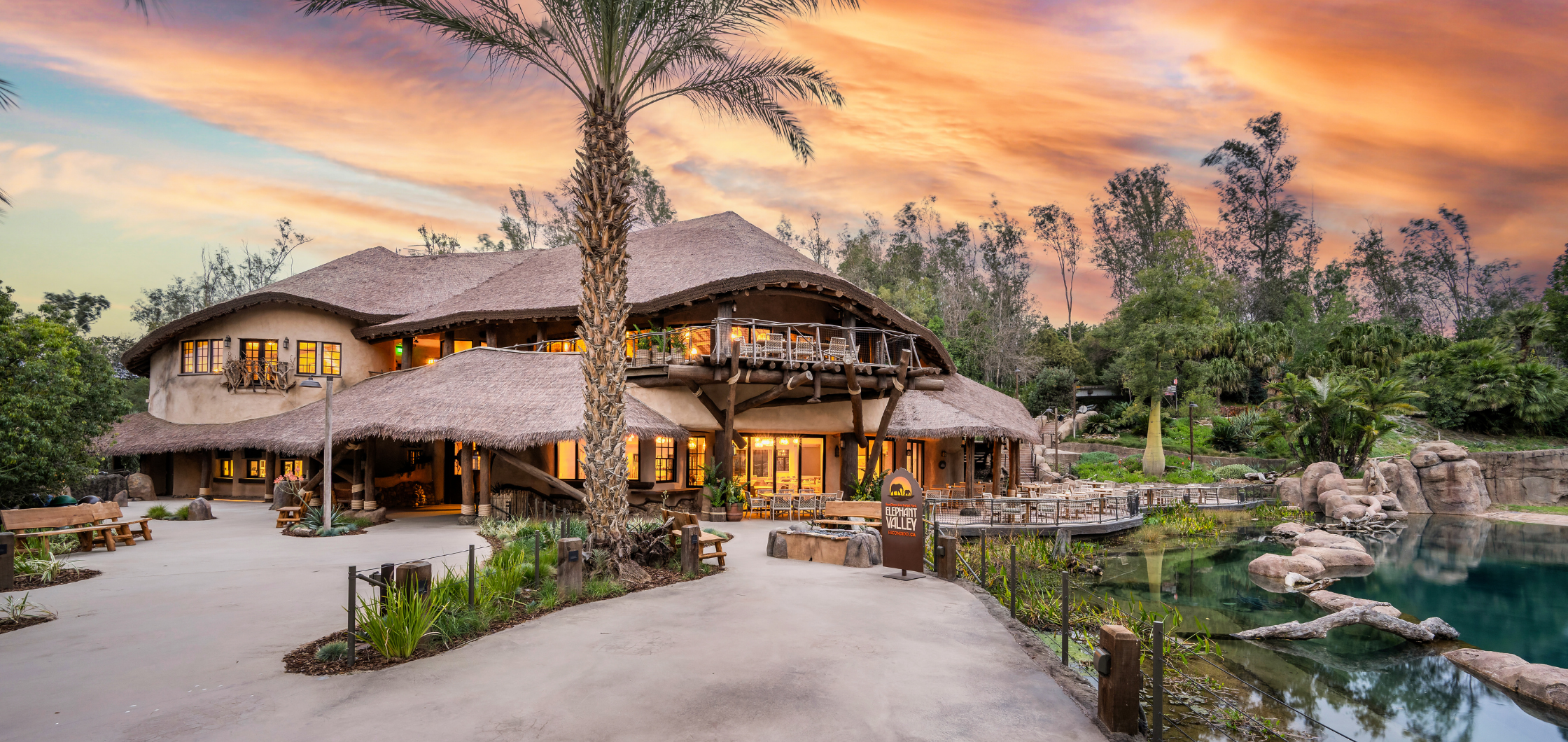
Featured image: Pink Media Productions | San Diego Safari Park
What “Class A Fire Rating Thatch Roofing” Means
Definition: Class A fire rating thatch roofing refers to engineered thatch products that have achieved the highest fire resistance classification available under ASTM E108 and UL 790 testing standards. A Class A rating indicates that a roofing material resists severe fire exposure — it will not ignite from an external flame source, will not allow flame to spread across the surface, and will not allow fire to penetrate through to the roof deck.
There are three rating levels: Class A, Class B, and Class C. Class A is the most stringent. For commercial occupancies — hotels, resorts, restaurants, parks, zoos, and any structure with public access — Class A is typically the minimum required by the International Building Code and most state and local amendments.
Natural thatch carries no inherent fire rating. It is classified as a combustible roofing material and requires chemical flame retardant treatment to achieve even a Class C equivalent in jurisdictions that permit it at all. That treatment degrades over time and must be reapplied, creating an ongoing compliance obligation. Endureed engineered thatch is Class A rated for the full life of the product.
How ASTM E108 Testing Establishes a Class A Fire Rating
ASTM E108 is the standard test method for fire resistance of roof coverings. It is the same test applied to asphalt shingles, metal roofing, and every other commercial roofing material. For Class A fire rating thatch roofing, a product must pass three specific exposure tests conducted on a full-scale roof assembly:
Flame spread test. A sustained flame is applied to the roof surface. The material must self-extinguish and limit flame travel to within defined boundaries.
Burning brand test. A wood brand — simulating a burning ember — is placed on the roof surface under wind conditions. The material must resist ignition and prevent the brand from causing deck penetration.
Intermittent flame test. Repeated flame application tests whether the material ignites and sustains combustion under variable exposure. Class A requires the material to self-extinguish after each flame withdrawal.
Endureed’s Performance and Premium products are tested to ASTM E108 Class A as a complete assembly. The test is conducted on the product as installed — not the raw material in isolation — which means the rating reflects real-world roof performance, not a laboratory sample.
Endureed Flamecore Technology is What Makes the rating permanent
The distinction between Endureed and both natural thatch and lower-tier synthetic alternatives is the fire resistance mechanism. Natural thatch relies on topical chemical application that wears away. Many synthetic thatch products use flame retardant additives that can leach out over time under UV and moisture exposure, degrading their fire performance without visible indication.
Endureed Performance and the Endureed Premium collection are manufactured with Endureed Flamecore Technology — a proprietary fire-retardant chemistry that is integrated into the material matrix during manufacturing. It does not wash off, degrade under UV exposure, or require reapplication. The Class A rating is permanent for the life of the product and is covered under the product warranty: 20 years for Performance, 30 years for Premium.
For a specifier, this matters at the documentation stage. A product with a permanent, tested Class A rating generates clean compliance documentation. A product dependent on field-applied treatment requires a maintenance schedule and periodic recertification — both of which create liability exposure for the project team.
<h2>How to use fire rating documentation in a commercial specification</h2>
For architects and contractors specifying Class A fire rating thatch roofing on a permitted commercial project, the documentation workflow is straightforward.
Florida Product Approval. Endureed Performance and Premium products carry Florida Product Approval — one of the most rigorous state-level building product certifications in the country. Florida Product Approval requires independent third-party testing and covers both fire and wind performance. If a product is approved under the Florida Building Code, it is accepted in virtually every other U.S. jurisdiction.
ICC and IBC compliance. The International Building Code, Section 1505, governs roof covering fire classification. Class A is required for most commercial occupancy types. Endureed’s test reports reference ASTM E108 and UL 790, both of which satisfy IBC Section 1505 requirements. These reports are available directly from Endureed and should be included in the project submittal package.
Insurance documentation. Commercial property insurers increasingly require fire rating documentation at the time of policy issuance for structures with thatch roofing. A Class A rated assembly with a permanent rating — not a chemically treated material — simplifies insurer review and supports lower premium classification. For a detailed overview of how engineered thatch addresses fire risk in real projects, see how engineered thatch protects life and property.
Submittal package contents. A complete submittal for a Class A fire rating thatch roofing specification should include: the ASTM E108 test report, the UL 790 listing (if applicable), the Florida Product Approval number, the manufacturer’s installation instructions, and the product warranty. Endureed provides all of these directly to the project team. Additional technical questions are addressed in the Endureed FAQ.
Class A fire Rating Thatch Roofing: Common Specification Questions
Does engineered thatch require a fire-rated underlayment to achieve Class A?
The Class A rating for Endureed Performance and Premium products is tested as a complete assembly. The test assembly includes underlayment, which means the specified underlayment is part of the rated system. Substituting a non-specified underlayment can void the assembly rating. Always confirm underlayment requirements with Endureed’s technical team before specifying.
Can Class A rated engineered thatch be specified in wildfire interface zones?
Yes. The ASTM E108 Class A rating is the standard referenced by the California Building Code, the International Wildland-Urban Interface Code, and most state fire marshal offices for construction in high fire hazard severity zones. Endureed Performance and Premium products meet this requirement.
What is the difference between a Class A material rating and a Class A assembly rating?
A material rating tests the roofing product in isolation. An assembly rating tests the full installed system — roofing material, underlayment, and deck — under real-world conditions. Endureed’s Class A rating is an assembly rating, which is the standard that building officials and fire marshals require for commercial projects.
Does the Class A rating apply to all Endureed product lines?
Endureed Performance and Premium carry a Class A fire rating. Endureed Basics is manufactured with fire-resistant material and is appropriate for residential applications, but does not carry the Class A assembly rating required for commercial permitted builds. For any project requiring documented fire compliance, Performance or Premium is the correct specification.
The Specification Case for Permanent Class A fire Rating Thatch Roofing
For commercial projects in the hotels and resorts, parks and zoos, and restaurant and food and beverage markets, Class A fire rating thatch roofing is not optional — it is the baseline. Endureed has held that standard since 1999, longer than any other manufacturer in the engineered thatch category.
The difference Endureed Flamecore Technology makes in practice is not just fire performance — it is documentation simplicity, warranty coverage, and the elimination of recurring compliance obligations that chemically treated alternatives create throughout the life of the building.
For project-specific fire rating documentation, test reports, or specification support, contact Endureed directly or explore the full Endureed Performance and Endureed Premium collection product lines.