Is Synthetic Thatch Fireproof? How Engineered Thatch Handles Fire

Thatched-roof-fire
A thatched roof sets a mood few materials can match. It is also the first thing an insurer, a code official or a cautious owner asks about: what happens in a fire?
The honest answer is that no roofing material is truly fireproof. What you can specify is a roof that resists ignition and slows the spread of flame. Endureed Performance and Premium engineered thatch carry a Class A fire rating, the highest classification for roof coverings.
Why Natural Thatch Is a Fire Risk
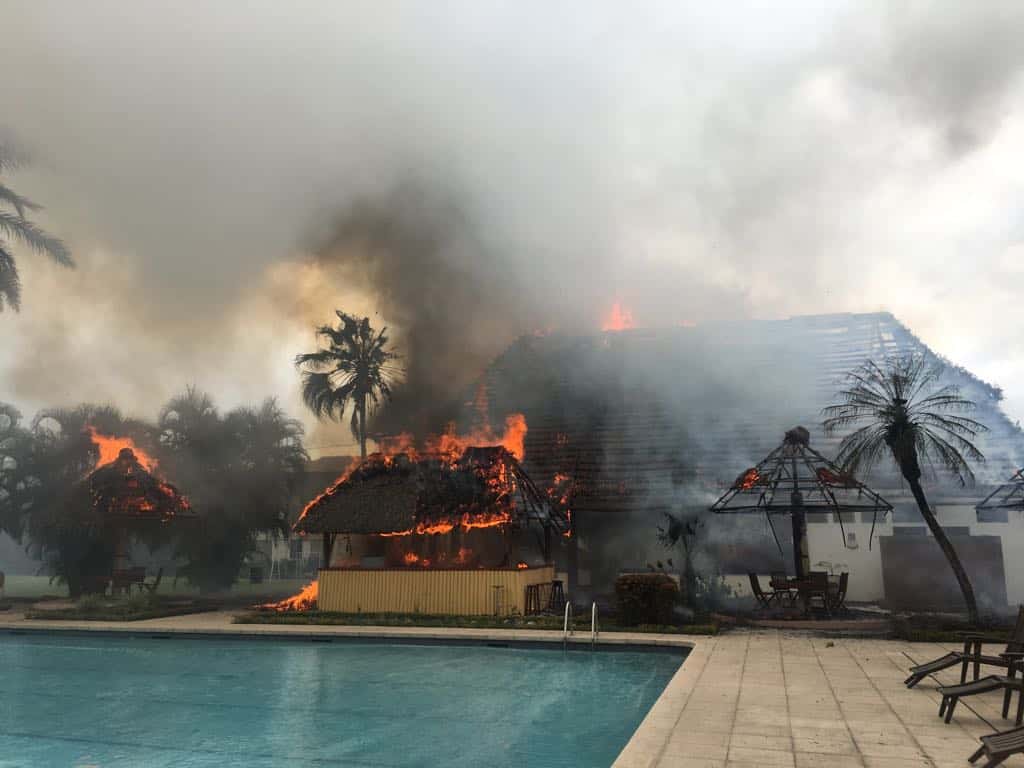
Natural thatch is dry plant material, and it burns readily. UK fire and rescue services note that while thatch roof fires are not common, more than 90% begin with a faulty flue or chimney. Once a fire takes hold, it is hard to put out, because thatch is built to shed water, including water from a fire hose.
The result is that damage tends to be extensive. In hospitality settings the exposure is often greater, with fire features, grills and kitchens close to the roofline.
The Hidden Cost of Treating Natural Thatch
Natural thatch can be treated with fire-retardant sprays, but surface treatments weather away and have to be reapplied. Each round adds labor, cost and, for a commercial property, time with guest areas closed.
Even freshly treated, natural thatch is still organic fuel. Treatment lowers the risk. It does not change what the roof is made of.
What a Class A Fire Rating Means
Roof coverings are fire tested and rated Class A, B or C. Class A is the highest rating, meaning the covering is effective against severe fire exposure. Many commercial projects and wildfire-prone jurisdictions require a Class A roof, which rules out untreated natural thatch for a large share of projects.
How Endureed Engineered Thatch Resists Fire
Endureed builds fire performance into the material itself.
- Class A fire rated. Endureed Performance and Premium carry the highest fire classification for roof coverings.
- Endureed FlameCore Technology. Our proprietary fire-retardant chemistry is engineered specifically for Endureed thatch. It resists ignition and flame spread without a spray schedule, and it works with our UV and HD Color technologies so the roof keeps its color.
- Built for more than fire. Wind rated to 200 mph, pest and rot proof, and zero maintenance.
- Backed for decades. Performance carries a 20-year warranty and Premium a 30-year warranty.
For projects where a fire rating is required, specify Performance or Premium.
See the Fire Test for Yourself
Watch the fire test video in our FAQ, then request a sample to see the texture up close. To talk through your project, call (877) 265-6124 or contact our team.