Ancient Form. Engineered to Endure: The Santa Rosa Creek Band Native American Roundhouse
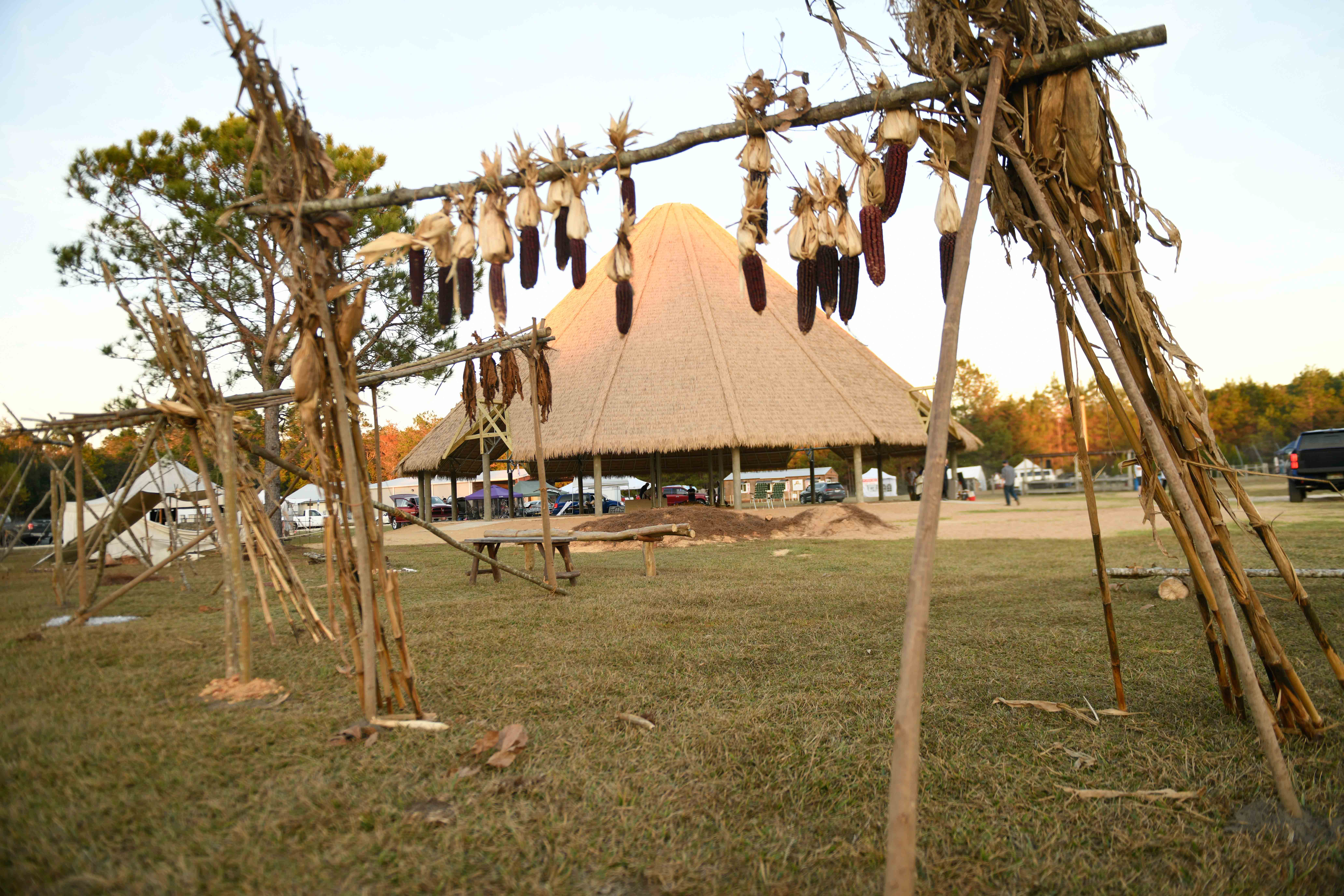
Milton, Florida — Completed November 2025
Architect: Larry R. Barrow, RA, NCARB, D.Des
Builder: Chief Dan “Sky Horse” Helms
Photography: Lydia Pope / K&L Photography
Producto: Performance Palm, New Palm / Zip Channel
Grant Funding: IMPACT 100 ($108,364), Santa Rosa Tourism Commission, Poarch Creek Indians
Background
The Santa Rosa Band of the Lower Muscogee are direct lineal descendants of Creek Indians who inhabited Northwest Florida long before it became a U.S. territory. When the Indian Removal Act of 1830 and the Florida Indian Removal Act of 1853 forced Native Americans from their lands, the Creek people who remained had to survive by concealing their identity entirely — hiding their language, ceremonies, and culture underground for generations.
That law remained on Florida’s books for 111 years, until the Civil Rights Act superseded it in 1964.
The Santa Rosa Creek Band was formally organized in 1990 with a mission to revive, preserve, and teach what survived. Today the band counts more than 2,000 members and operates a 95-acre cultural grounds in Milton, Florida, anchored by a Cultural Education Center that opened in 2024 and draws thousands of visitors to its annual Creek Fest each November.
The Native American roundhouse was the next step.
The Project
Native American roundhouses have served as the civic and ceremonial heart of Creek communities since at least 4000 BCE. Known also as council houses, they hosted ceremonies, tribal councils, weddings, storytelling, and the reception of guests. According to Chief Dan Helms, “The roundhouse was a place where they held council meetings, held ceremonies, it was used for teaching and hospitality when people are coming to visit. It was an all-purpose kind of building.”
Most original roundhouses in the eastern United States were destroyed during the removal era. As Chief Helms noted, “When the Indian Removal Acts came about, they burned the roundhouses and villages to wipe out the culture. So there aren’t original roundhouses anywhere.”
The nearest comparable structure is in Tallahassee. The next closest is in Oklahoma, approximately 1,000 miles away.
The Santa Rosa Creek Band’s vision was to build a permanent, authentic reproduction — a Native American roundhouse that could serve the same functions it always had, while meeting every modern standard required of a public gathering structure. A $108,364 IMPACT 100 grant, awarded in 2023, provided the catalyst.
The Design Challenge
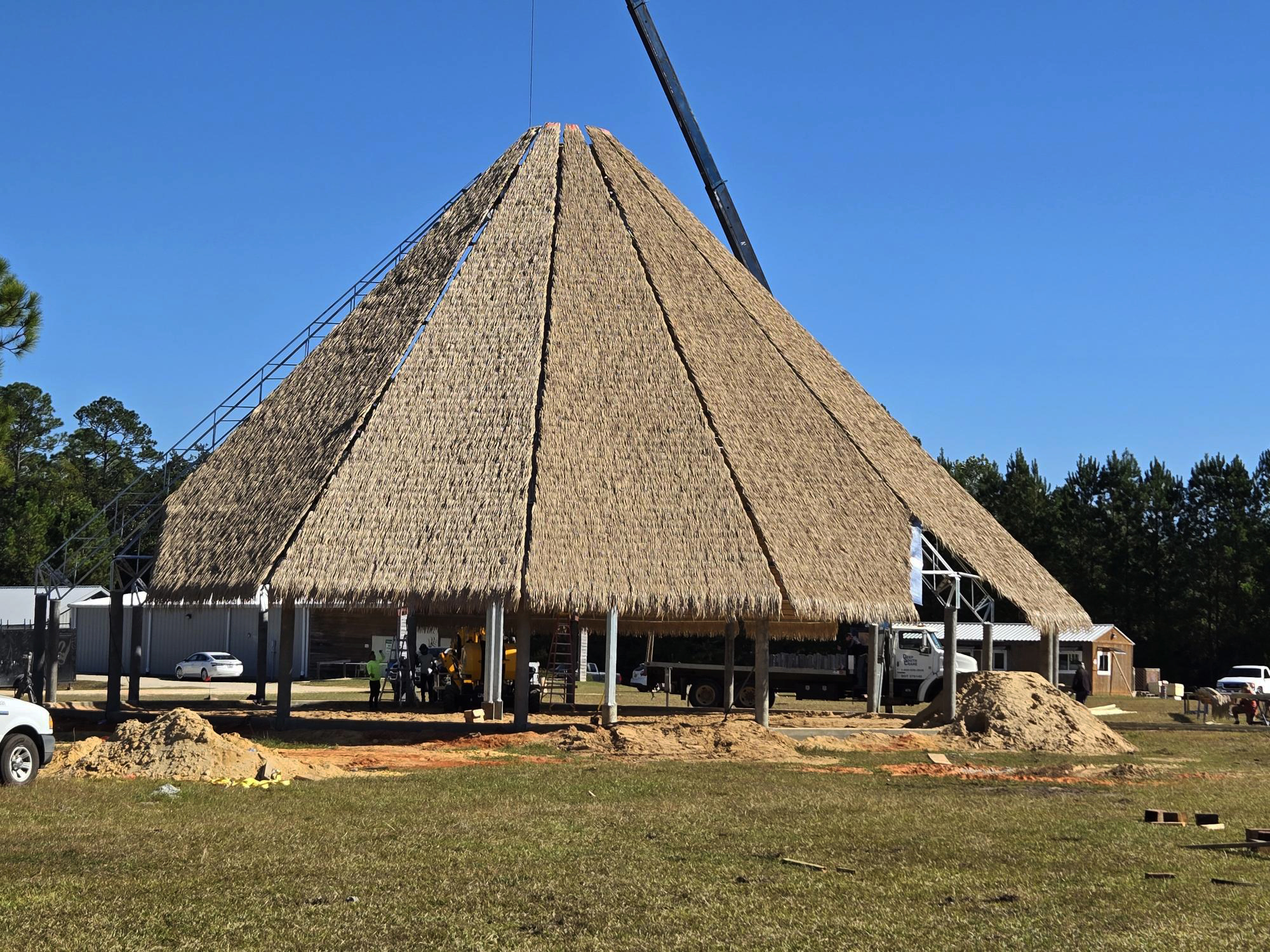
Architect Larry Barrow was engaged to bring the vision to life. The completed Native American roundhouse is built at a scale that commands the landscape:
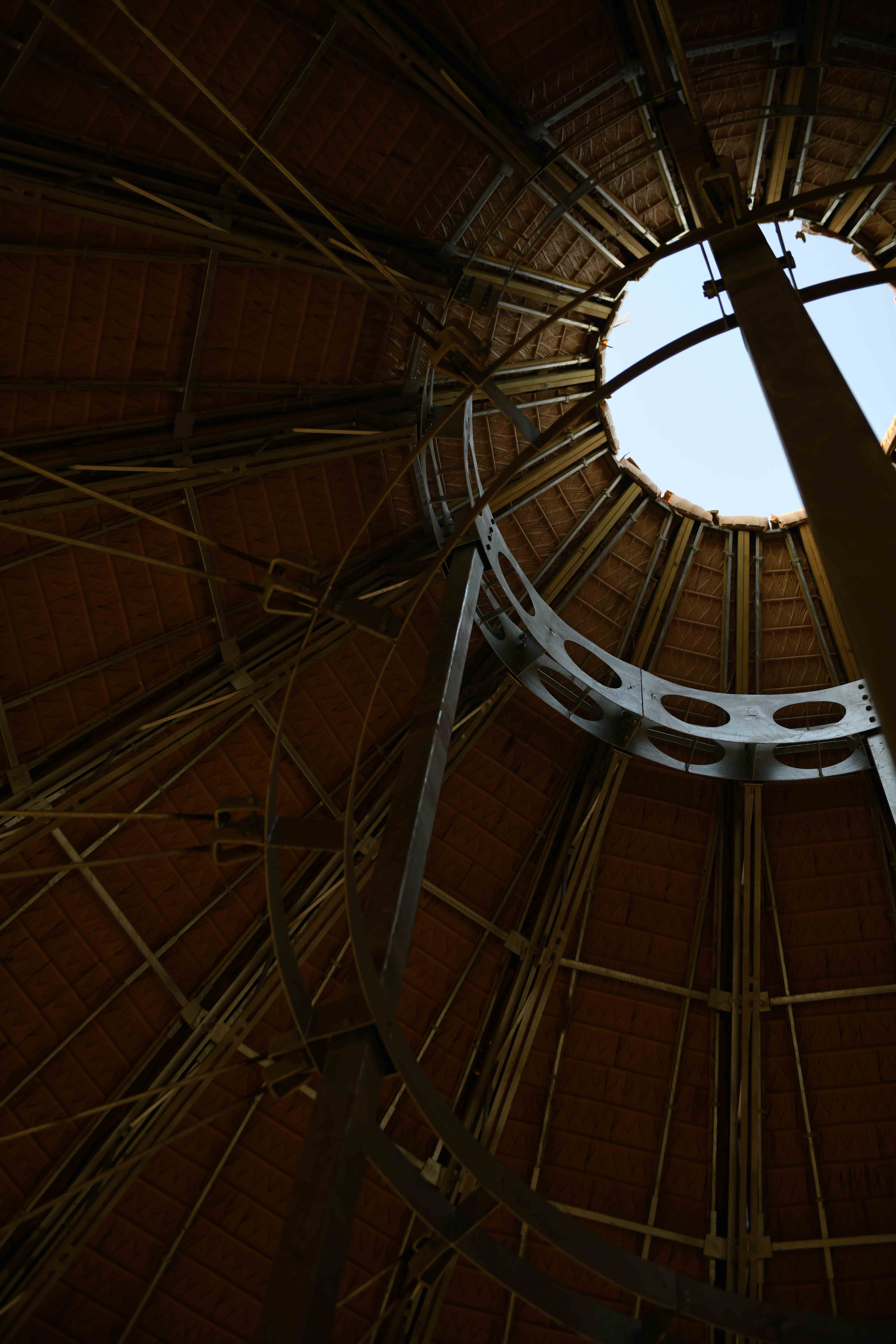
- 40-foot radius / 80-foot diameter
- 52 feet tall
- 45-degree (12/12) roof pitch
- Central smoke opening at the apex
- White sand floor
- Four White Cedar pillars placed in the cardinal directions
To manage a structure of this scale safely, the project team used a prefabricated steel frame and roof panel system assembled at ground level before being raised into position. The approach significantly improved worker safety and, according to Barrow, “dramatically increased productivity.” It is, as he noted, “awe-inspiring to think about building something like this in the olden days — mind-boggling how they did this without modern equipment and technology.”
Why Endureed
The roof is the defining element of any Native American roundhouse. It had to read as traditional thatch — visually authentic to a form with thousands of years of cultural history — while performing as a permanent, fire-rated material for a public structure that will host ceremonies, school field trips, and community gatherings for generations.
The history made fire safety non-negotiable. The roundhouses that survived the removal era were the ones that couldn’t be burned. This one needed to be built that way from the start.
Barrow specified Performance Palm for five reasons:
Authentic aesthetics. Performance Palm replicates the texture and depth of natural thatch closely enough to honor the architectural heritage the Native American roundhouse was built to represent.
Non-flammability. Unlike natural thatch, Performance Palm carries a Class A fire rating without chemical treatment. For a structure hosting open ceremonial fires and public gatherings, this was a requirement with no flexibility.
Long-term durability. Performance Palm resists UV degradation, moisture, rot, mold, insects, and wildlife intrusion. The structure was built to serve the community for generations, not years.
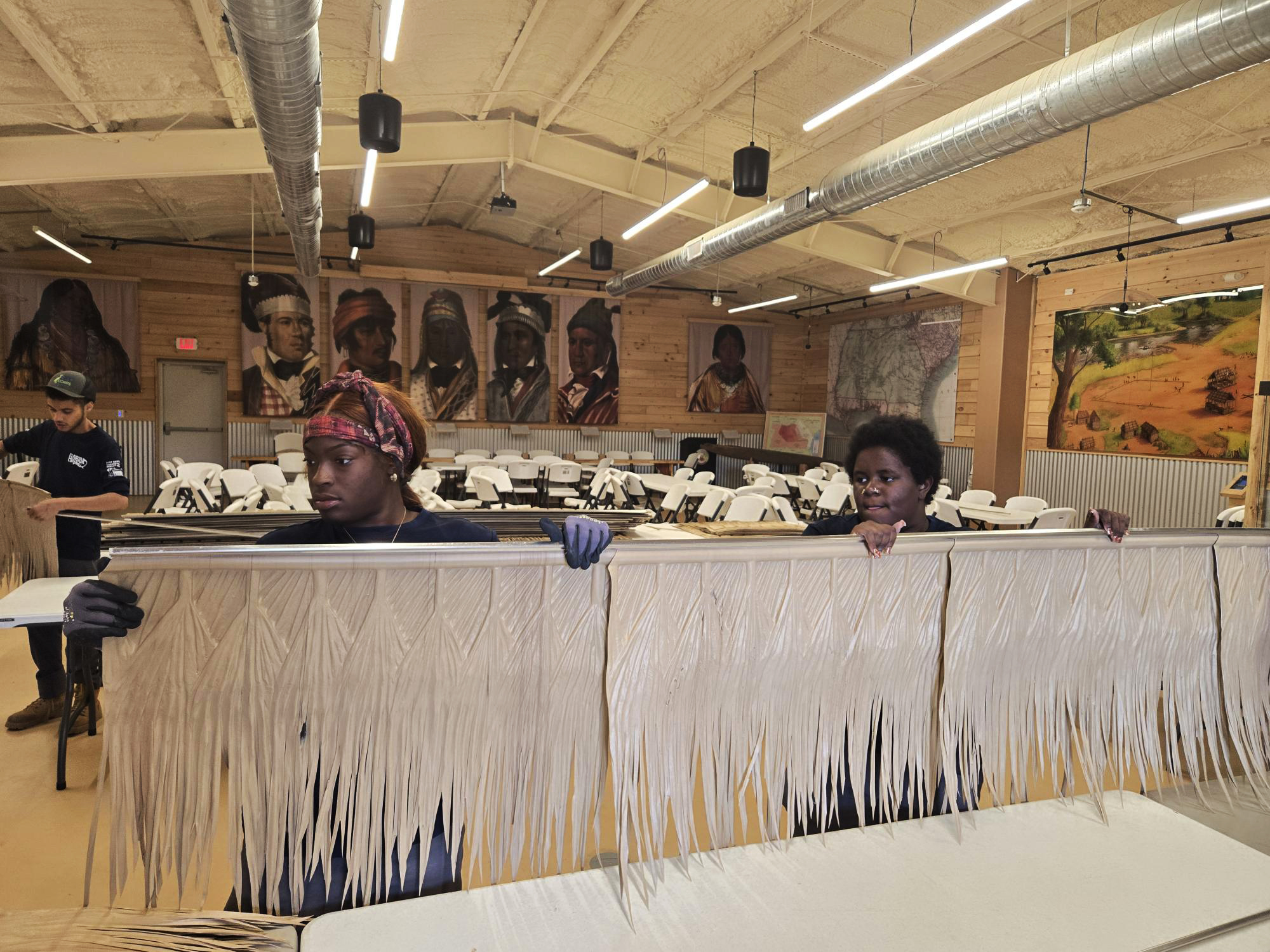
Prefabricated modular system. Endureed’s modular units aligned directly with the project’s ground-assembly construction approach, enabling faster installation and consistent quality across the entire roof.
Technical support. “Endureed stood out not just for the product itself, but for the level of technical and customer support they provided throughout the process,” Barrow said.
The Result
The Santa Rosa Creek Band Native American roundhouse now stands as the centerpiece of the band’s 95-acre cultural grounds in Milton, Florida. It is the first structure of its kind built for this community in nearly 200 years, and one of only a handful of traditional-style council roundhouses in the entire southeastern United States.
Inside, a ceremonial fire burns on a white sand floor, surrounded by cedar pillars aligned to the cardinal directions. Storytelling, dancing, craft demonstrations, and intergenerational teaching happen within its walls. Creek Fest 2025 marked its public debut, welcoming thousands of visitors to experience a living piece of Muscogee heritage.
The project demonstrates what becomes possible when engineered materials are specified with intention: a Native American roundhouse that is visually true to tradition, built for permanence, and safe for every person who gathers inside it.
“The roundhouse is more than a building. It is a living symbol of Creek identity, history, and resilience.”
— Larry Barrow, Architect, Fabhaus
View more photos from this amazing project in our gallery!