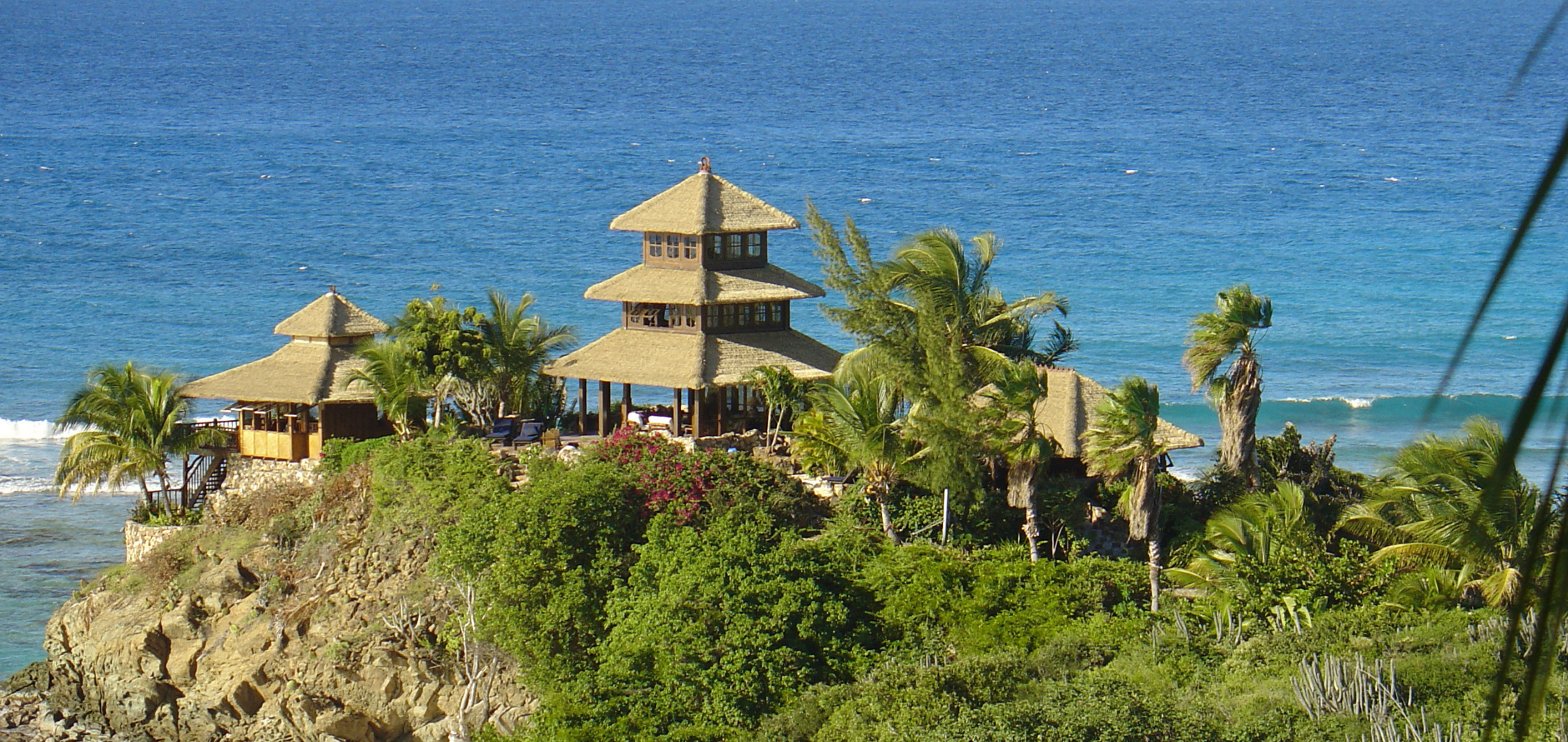
Engineered thatch for hospitality — what resort developers and designers need to know
Endureed has been manufacturing engineered thatch since 1999, and the hospitality sector has been its most demanding proving ground. Engineered thatch for hospitality is not a decorative upgrade — it is a specification decision that affects fire code compliance, insurance underwriting, lifecycle cost modeling, and the guest experience that drives revenue. This article explains what hospitality developers, architects, and property operators need to understand before specifying thatch on a resort, hotel, restaurant, or spa project.
Why Hospitality Projects Require A Higher Specification Standard
Thatching has defined the aesthetic of tropical and resort architecture for centuries — from the open-air pavilions of Bali and the Maldives to the beachfront palapas of the Caribbean and the safari lodges of East Africa. The material communicates something specific: that a property belongs to its environment, that its designers made deliberate choices, and that the experience it offers is distinct from a standard hotel room.
The challenge for modern hospitality construction is that natural thatch — the material that established that aesthetic — cannot meet the operational, safety, and regulatory requirements of a commercial hospitality property. It requires full replacement every three to five years in tropical climates. It cannot achieve a Class A fire rating without field-applied chemical treatments that must be renewed on a scheduled basis. It harbors pests, retains moisture, and sheds debris. For a property operating 365 days a year with guests present, those are not manageable inconveniences — they are operational liabilities.
Engineered thatch for hospitality was developed precisely to close that gap: the aesthetic of natural thatch at the performance standard that commercial hospitality construction requires.
What Engineered Thatch Delivers That Natural Thatch Cannot
Fire Performance That Satisfies Commercial Code
Commercial hospitality structures — hotels, resorts, restaurants, and assembly occupancies — are subject to fire code requirements that natural thatch cannot meet without ongoing chemical treatment. Endureed engineered thatch carries a Class A fire rating tested to ASTM E108 — the highest classification available for roofing materials — achieved through Endureed Flamecore Technology integrated into the polymer at manufacture.
There is no field treatment schedule. No renewal requirement. No compliance gap between inspection cycles. The fire performance is in the material, and it does not diminish over the warranty period.
Wind Performance For Coastal And Tropical Environments
The majority of hospitality thatch installations occur in coastal, tropical, or island environments — the same environments most exposed to hurricane and typhoon conditions. Endureed engineered thatch is Florida Product Approved for wind uplift in excess of 200 mph, a certification that requires documented test results across wind uplift, wind-driven rain, impact resistance, nail pullout, and pressure ratings.
For resort developers building in hurricane zones — the Gulf of Mexico, the Caribbean basin, the Pacific island markets — that certification is not optional. It is what makes the material insurable and permittable. See synthetic thatch roofing for resorts for project-specific context on how that performance translates to installed resort applications.
Lifecycle Cost That Changes The Investment Conversation
The upfront cost of engineered thatch is higher than natural thatch. The lifecycle cost is not. Natural palm thatch in a tropical coastal environment requires full replacement every three to five years — four to six complete re-roofing cycles over a 20-year ownership period, each carrying full material and labor costs, plus annual maintenance, fire treatment, and pest control between cycles.
Endureed’s Premium line carries a 30-year warranty. Zero re-thatching. Zero chemical treatment cycles. Zero pest mitigation protocols. For a resort property amortizing a roofing investment over a standard ownership horizon, the numbers reverse decisively by year five. See the engineered vs. natural thatch lifecycle cost comparison for the documented cost breakdown, including the St. Louis amusement park case study where engineered thatch saved an estimated $350,000 over 20 years relative to natural thatch on the same structure.
Sustainability Credentials For LEED-Aligned Projects
Resort developers and hotel brands operating under sustainability commitments increasingly require materials that support Certificación LEED or equivalent green building frameworks. Endureed engineered thatch supports those goals in two ways: it is manufactured using a zero-waste process that does not rely on harvesting natural or endangered plant materials, and its 30-year no-maintenance lifecycle eliminates the recurring resource consumption — chemical treatments, replacement material, labor — associated with natural thatch maintenance cycles.
For properties pursuing LEED credits in materials and resources or sustainable sites categories, engineered thatch is a documentable specification rather than a general sustainability claim.
Visual Authenticity As A Specification Requirement
In hospitality design, visual authenticity is not an aesthetic preference — it is a specification requirement. A resort that specifies thatch roofing is making a commitment to a particular guest experience, and the material needs to deliver that experience at the level of scrutiny a discerning guest applies on arrival.
Endureed’s Premium product line was developed in direct response to that requirement. Each of the six Premium profiles replicates a specific regional thatch tradition with dimensional depth, color variation, and profile geometry that distinguishes it from generic synthetic alternatives:
Kilimanjaro replicates a traditional weathered Tanzanian cape reed roof — heavy, dense, and textured in a way that reads as authentically East African to guests who have seen the original material in context.
Voltereta replicates hand-trimmed European thatching — closely tapered, slightly weathered in appearance, the profile associated with the English countryside and Scandinavian coastal architecture.
Kona captures Hawaiian pili grass and Asian alang-alang grass thatching — a combination of wide leaf and smaller grass reed that distinguishes Pacific island architecture from Caribbean or African styles.
Bali replicates East Asian grass thatching — fine, loosely tapered, slightly longer in profile, suited to resort environments where the design references Indonesian or Southeast Asian vernacular architecture.
Ciudad del Cabo replicates African yellow grass or cape reed — coarsely textured, longer in the fringe, the profile most associated with sub-Saharan thatching traditions.
Dominica delivers a lush, tropical palm profile suited to Caribbean and Central American resort environments where the design intent is immersive and place-specific.
Color variation in all Premium profiles is handled through Endureed’s HD Color process — pigment and shadow depth integrated into the polymer at manufacturing, not applied as a surface treatment. No two courses read identically, which is how natural thatch behaves. That variation is present from installation day one and maintained across the 30-year warranty period.
Product Selection For Hospitality Projects
Endureed’s Performance and Premium product lines are the appropriate specification tiers for engineered thatch for hospitality applications. For the full range of hospitality environments where Endureed has been specified and installed, see Endureed’s hospitality and resort market applications.
Performance Palm, Performance Reed, and Performance Grass carry a 20-year no-maintenance warranty, Class A fire rating, and 200 mph wind certification. Performance is the standard specification for commercial hospitality builds where permitting, code compliance, and lifecycle cost are the primary decision drivers — restaurants, pool structures, spa pavilions, and secondary resort buildings where visual fidelity is important but the highest-tier profile detail is not required.
Premium — Bali, Capetown, Dominica, Kilimanjaro, Kona, and Somerset — carries a 30-year no-maintenance warranty and the same Class A fire rating and wind certification as Performance, with the profile depth, dimensional variation, and regional specificity that main resort structures, signature restaurants, and flagship hospitality environments require. Premium is the product that appears in award-winning resort photography and withstands the comparison to natural thatch that experienced guests and design critics will make on site.
Frequently Asked Questions About Engineered Thatch For Hospitality
What is engineered thatch for hospitality? Engineered thatch for hospitality is a specification-grade polymer thatch product designed for commercial resort, hotel, restaurant, and spa applications. It replicates the aesthetic of natural thatch while meeting commercial fire code, wind certification, and lifecycle requirements that natural thatch cannot satisfy. Endureed has been the standard manufacturer in this category since 1999.
Does engineered thatch meet fire code for hotels and resorts? Yes. Endureed engineered thatch carries a Class A fire rating tested to ASTM E108 — the highest classification available for roofing materials — across the Performance and Premium product lines. Fire resistance is achieved through Endureed Flamecore Technology integrated at manufacture, with no field treatment or renewal schedule required.
How long does engineered thatch last on a resort property? Endureed Performance carries a 20-year no-maintenance warranty. Premium carries a 30-year no-maintenance warranty. No re-thatching, chemical treatment, or maintenance schedule is required across either warranty period — a significant operational distinction from natural thatch, which requires full replacement every three to five years in tropical coastal environments.
Can engineered thatch support LEED certification? Endureed engineered thatch is manufactured using a zero-waste process from non-harvested materials, which supports LEED documentation in materials and resources categories. Its 30-year maintenance-free lifecycle also eliminates recurring resource consumption associated with natural thatch replacement cycles.
Which Endureed product line is right for a luxury resort? Premium is the specification for luxury resort and flagship hospitality environments — six regionally specific profiles with 30-year warranty, Class A fire rating, and 200 mph wind certification. Performance is the standard for secondary structures, food and beverage outlets, and commercial hospitality builds where lifecycle cost and code compliance are the primary criteria.
The Specification That Defines The Experience
Engineered thatch for hospitality is the material that closes the gap between what resort architecture aspires to look like and what commercial construction is required to perform to. Endureed has been manufacturing to both standards simultaneously since 1999 — longer than any other company in the category — and the specification documentation to support every hospitality project is available before the design development phase begins.