Even though thatch roofing has evolved immensely as we’ve entered the modern age—especially with the development of engineered thatched roofing—regular thatch, made of dried leaves and vegetation, is still in use throughout the world.
La paja natural sin duda tiene un encanto estético atemporal. Pero ¿puede perdurar a largo plazo? Descubra la respuesta y vea qué problemas podrían surgir con los techos de paja.
6 problemas comunes con el envejecimiento del techo de paja natural
Con tanta belleza, ¿qué problemas podrían esconder los techos de paja natural? Como cualquier material natural, puede deteriorarse con el tiempo y causar problemas. Aquí tienes los seis problemas más comunes que observamos con los techos de paja natural envejecidos.
1. Podredumbre
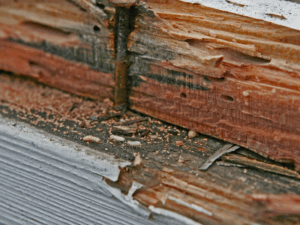
Dado que la paja natural se fabrica a partir de vegetación como hojas de palma, juncos, hierba y cañas, es susceptible a la putrefacción con el tiempo. Esto es especialmente cierto en entornos con precipitaciones o humedad significativas, and it can be even worse if an area’s wet season is not accompanied by adequate sunshine to dry the roof. With so much moisture, natural thatch can quickly begin to deteriorate, but Con el tiempo se pudrirá, incluso en un clima seco, debido a su naturaleza orgánica.
2. Plagas
La paja natural es particularmente atractiva para las plagas y la fauna silvestre no deseada. Se ha utilizado durante siglos para proteger a las personas del frío y la intemperie. Sin embargo, esto la convierte en el hogar perfecto para otras especies que buscan lugares cálidos y secos para anidar, como ratones, ratas, pájaros y serpientes. Los insectos también pueden anidar en el material natural de un techo de paja. Algunas plagas comunes incluyen escarabajos xilófagos, hormigas y arañas.
Si bien existen formas de reducir las plagas en su techo de paja, esto a menudo requiere pesticidas fuertes, que Puede causar daños a la vida silvestre natural y al medio ambiente. de la escorrentía de la lluvia.
3. Adelgazamiento y mala compactación
Natural thatch can be tricky to maintain properly, but without maintenance, you open yourself to a host of problems. For example, thatch roofs can become thin and badly compacted over the years without proper maintenance (i.e., not filling and re-compacting the thatch during the “combing” process).
A medida que se adelgaza y el alambre se hace visible, el techo es mucho más propenso a tener goteras. Desafortunadamente, evitar las goteras es una batalla constante para los propietarios de techos de paja natural, ya que... Los techos requieren un mantenimiento frecuente.
4. Musgo y escombros
Improper maintenance can lead to even more issues for thatched roofs. As a natural thatch roof ages, it begins to accumulate moss and debris over time—both of which can become a safety hazard.
Estos acumulan peso en el techo e incluso pueden acelerar la pudrición. Si no se tratan el musgo y los residuos del techo, es posible que tenga que reemplazarlo mucho antes de lo previsto.
5. Degradación estética
La paja natural luce hermosa al principio, pero con el tiempo, pierde gran parte de su atractivo. Al instalarla inicialmente, presenta vibrantes tonos tostados, marrones y amarillos; sin embargo, este color se desvanece rápidamente a tonos grises o incluso negros con el tiempo. La única solución a este problema es reemplazar la paja natural por completo para evitar la aparición de podredumbre o moho.
6. Mayor riesgo de incendio
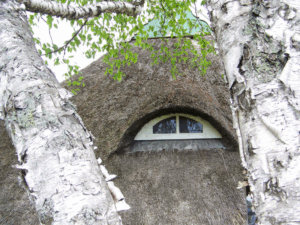
Perhaps, the biggest problem that natural thatch faces is its significant fire risk. Composed of dry vegetation, it’s all too easy for natural thatch to catch fire from a lightning strike or indoor fires. For residential and commercial buildings alike, this fire risk puts everyone in the building in danger. Lo que puede comenzar como un pequeño incendio puede volverse rápidamente devastador. Si la paja natural se incendia, los tratamientos con fuego pueden ayudar a reducir este riesgo, pero no por completo.
¿Es la paja artificial la solución?
Whether you’re considering installing natural thatch for your property or you’re already an owner, you can now see that there are problems beneath its beauty. Because of the natural degradation, it will eventually reach the stage where it requires complete re-thatching. Storms and the heat of the sun take a significant toll over time, and with risks such as pest infestations or deadly fires, you may be wondering if there’s a way to have its beauty without the risks. Luckily, engineered thatch is a wonderful solution.
La paja artificial parece idéntica a la paja natural., but it is made of a proprietary blend of polyvinyl chloride (PVC)—the same material used in bulletproof vests—which makes it incredibly durable and long-lasting. In fact, Endureed’s engineered thatch comes with a Garantía de 20 años and is guaranteed to be fully fire, hurricane, rain, pest, and rot-resistant. If that wasn’t enough, engineered thatch is an environmentally friendly building material that is 100% recyclable—engineered materials also avoid the environmental damage of mass farming of local trees and plants for roofing materials.
Su durabilidad solo es comparable a su belleza, ya que está disponible en una variedad de colores y estilos. ¡Elige entre una variedad de opciones inspiradas en las zonas de Ciudad del Cabo, Kilimanjaro, Somerset, Kona y Bali!
Invierta en paja de ingeniería de primera calidad
Como puede ver, la paja natural presenta problemas importantes a medida que envejece. En el mejor de los casos, empieza a perder su atractivo estético y, en el peor, se vuelve peligrosa para la propiedad y las personas que la habitan.
Fortunately for people who love the appearance of natural thatch, you don’t have to compromise!
Our engineered thatch materials retain the natural look of thatch but are built to be one of the safest, strongest, and most durable roofing materials in the industry. Don’t lose peace of mind wrestling with natural thatch—invest in the paja de ingeniería de la más alta calidad ¡hoy!